 how-to
How to Fix Torn Jeans by Hand: Step-by-Step
Table of Contents
- What You'll Need: Denim Repair Kit Essentials
- How to Patch Jeans by Hand: The Core Techniques
- How Long Does It Take to Hand Mend Jeans
- Frequently Asked Questions
Last Updated: September 28, 2026
What You'll Need: Denim Repair Kit Essentials
To fix torn jeans by hand, gather a size 7 or 8 needle, heavy-duty thread (polyester or upholstery), sharp fabric scissors, and a thimble. Match thread to denim color or use contrasting thread for visible mending.
Heavy-duty thread holds under stress; lightweight thread snaps. Choose thread weight based on fabric weight, not just color.
The setup takes five minutes. Organize everything on a flat surface so you're not hunting for tools mid-stitch.
How to Patch Jeans by Hand: The Core Techniques
Patching torn jeans by hand uses two main stitches. The whip stitch closes holes. The slip stitch hides repairs inside seams.
The whip stitch brings edges together from the outside. It's visible, so it works for intentional visible mending. Start by threading your needle and knotting the end. Push the needle through one edge of the tear, then across to the opposite edge. Keep stitches close, roughly one-eighth inch apart. Tension matters. Pull too tight and you pucker the fabric. Too loose and the repair fails.
The slip stitch runs inside a fold of fabric. It's invisible from the outside. This works for seam repairs. Slide your needle along the fold, then catch a tiny bit of the opposite fabric. The thread stays hidden inside the seam.
For larger holes, a patch reinforces the repair. Cut a patch from matching denim or cotton. Position it behind the hole. Stitch around all four edges using a backstitch or running stitch. The patch transfers stress away from the damaged area.
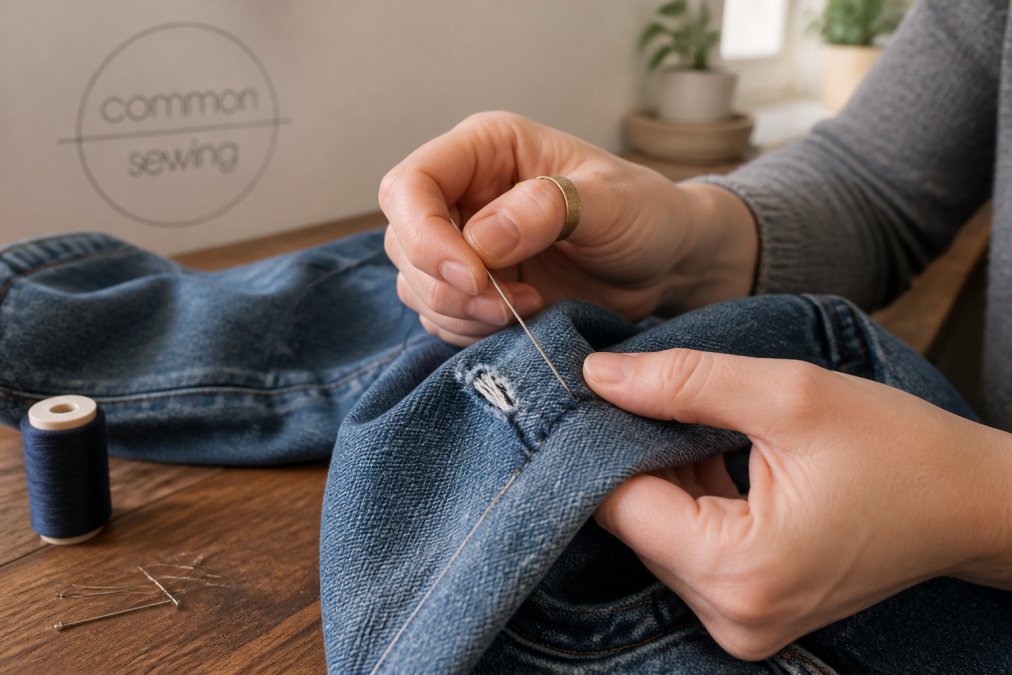
Frayed edges need trimming before you stitch. Use fabric scissors to cut away loose threads. This prevents unraveling and gives you clean edges to work with.
Sign up with your email address to receive news and updates. →
How Long Does It Take to Hand Mend Jeans
A simple tear takes 15 to 30 minutes to fix torn jeans by hand. A patch repair takes 45 minutes to an hour. Seam reinforcement takes 20 to 40 minutes depending on seam length.
Time depends on tear size, your stitch speed, and how tight you want the repair. Beginners work slower. That's normal. Speed comes with practice.
The real investment isn't time, it's attention. Rushing creates loose stitches that fail. Taking your time builds durability. A well-executed repair outlasts the original seam.
Hand mending teaches you fabric behavior in ways machine sewing doesn't. You feel the resistance, adjust tension by hand, and develop intuition about what holds. These skills transfer to every sewing project you attempt afterward.
Frequently Asked Questions
What is the best stitch for repairing denim by hand?
The whip stitch works best for small tears and seams because it creates a strong, tight closure along the fabric edge. For larger holes or when you want invisible mending, the slip stitch is ideal because it runs inside the fold of fabric and doesn't show on the surface. The backstitch provides extra reinforcement for high-friction zones like the inner thigh. Your choice depends on tear size and whether you want the repair visible or hidden.
How long does it take to hand mend jeans?
Small repairs using the whip or slip stitch typically take 15 to 30 minutes, depending on your experience level and stitch density. Larger patches can take 45 minutes to an hour. Beginners should expect the longer end of these ranges. The time increases if you're matching thread color carefully or reinforcing multiple weak points in the seam.
What denim repair kit essentials do I absolutely need?
At minimum, you need a sewing needle (size 70/10 or 80/12 for denim), heavy-duty thread in matching or contrasting colors, fabric scissors, and a thimble to protect your finger. For patching, add a small piece of denim or cotton fabric. A seam ripper helps remove old stitches if needed. These items form the foundation of any denim repair kit and cost very little to assemble.
Learning to fix torn jeans by hand builds confidence in basic textile repair. Whether you're extending the life of favorite pieces or exploring sustainable clothing practices, hand mending is a practical skill that pays off. Common Sewing's structured approach to garment repair teaches you the exact techniques shown here, with step-by-step guidance from an experienced tailor. Sign up with your email address to receive news and updates about how to develop your sewing skills.