 how-to
How to Thread a Sewing Machine: Step by Step
Table of Contents
- Prepare Your Machine Before Threading
- How to Thread a Sewing Machine Step by Step
- How to Wind a Bobbin and Troubleshoot Thread Tension
- Frequently Asked Questions
Last Updated: September 25, 2026
Prepare Your Machine Before Threading
Before you thread a sewing machine, prepare it to prevent frustration.
Turn off your machine and raise the presser foot to open the tension discs, allowing thread to slide through easily.
Check your needle for bends or dullness, and ensure it's inserted correctly with the flat side facing the right direction.
Wind a bobbin before starting to avoid stopping mid-project.
How to Thread a Sewing Machine Step by Step
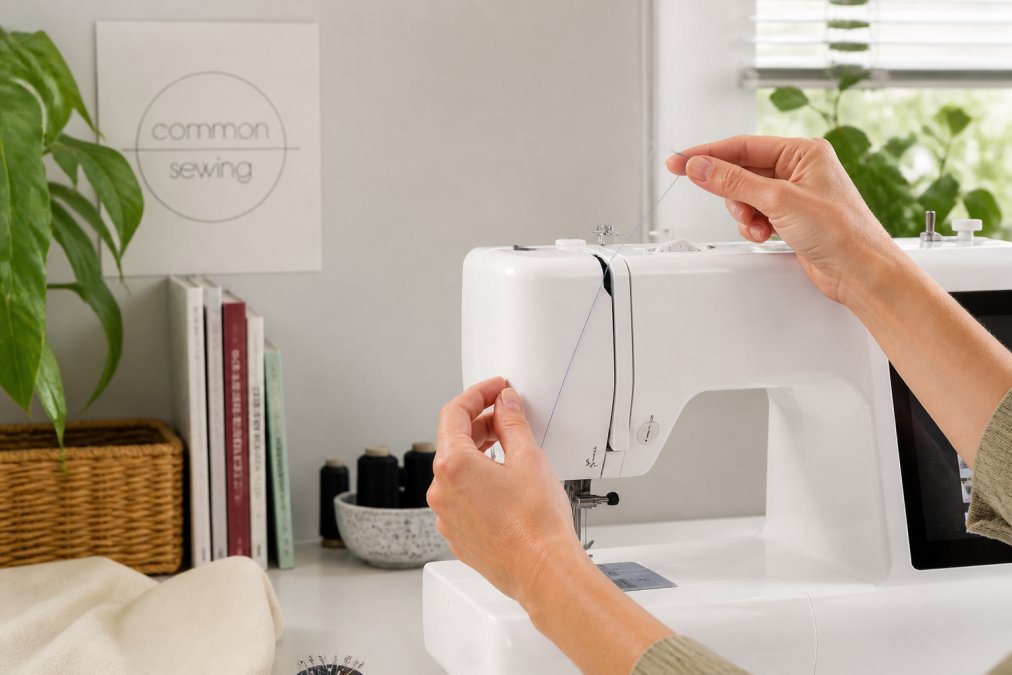
Once you know the path, threading a sewing machine is straightforward.
Step 1: Place the spool on the spool pin. Push it firmly so it doesn't slip.
Step 2: Guide thread through the thread guide. Pull thread through this small hook above the needle to keep tension even.
Step 3: Thread through the take-up lever. This metal hook controls how much thread feeds to the needle with each stitch.
Step 4: Pass thread through the tension dial. Guide thread into the slot to control stitch tightness.
Step 5: Thread through the needle eye. Pull thread through from front to back and leave a 4-6 inch tail for the bobbin thread to catch.
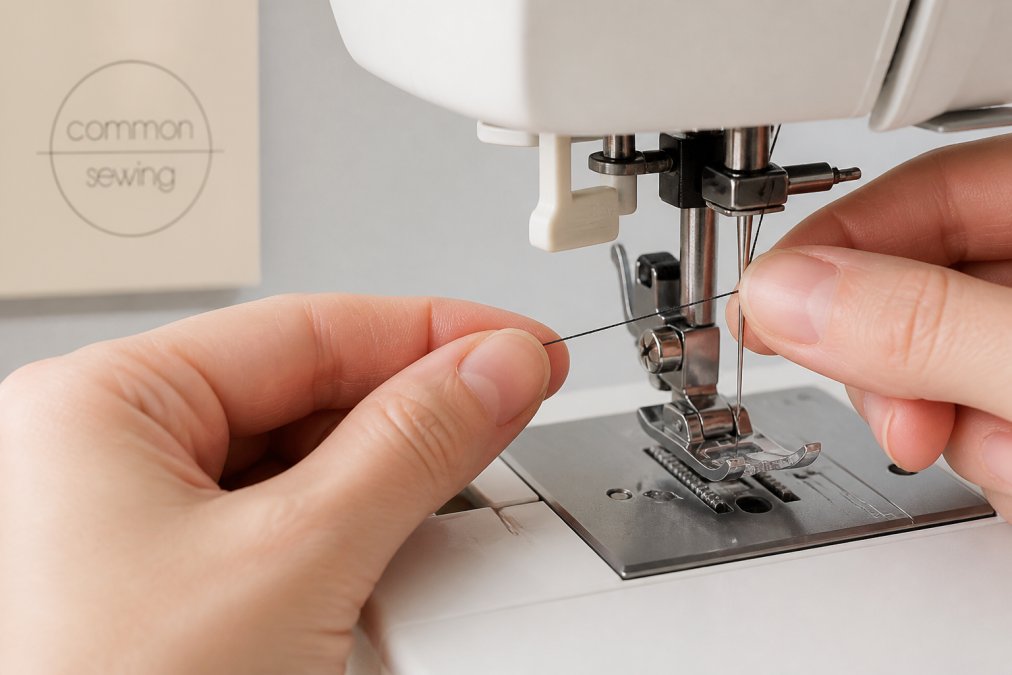
Thread slowly and watch each step to avoid tangles and thread nests on the back of fabric.
How to Wind a Bobbin and Troubleshoot Thread Tension
The bobbin holds the lower thread. Winding it correctly prevents tension problems and thread breaks.
Winding the bobbin: Place an empty bobbin on the spindle, pull thread through the winding guide, press the bobbin winder foot down to disengage the needle, then press the pedal until full.
Placing the bobbin: Open the bobbin case. Insert the wound bobbin so thread unwinds counterclockwise. Pull thread through the tension spring slot in the bobbin case. Close the case and you're ready to sew.
Troubleshooting tension: Loose stitches mean upper thread tension is too loose. Tighten the tension dial by turning it to a higher number. Tight stitches mean tension is too tight. Lower the number. Test on scrap fabric first.
If you see loops on the back of fabric, the bobbin thread is too loose. If loops show on top, the upper thread is too loose. Adjust one at a time and test again.
Many beginners think they have a broken machine when they really just need to rethread. If stitches skip or break, pull out the thread completely and start over. A fresh threading fixes most problems.
Frequently Asked Questions
Should the presser foot be up or down when threading a sewing machine?
The presser foot must be up when threading. Raising the presser foot opens the tension discs, allowing thread to pass through smoothly. If the foot is down, the tension discs clamp shut and the thread cannot seat properly, causing threading failures and tension problems during sewing.
How do I wind a bobbin correctly?
Place an empty bobbin on the bobbin winder pin. Guide thread from the spool through the bobbin winder tension guide, then wrap it around the bobbin 2-3 times by hand. Engage the bobbin winder by moving the lever or button, then press the foot pedal or start button. Stop when the bobbin is full and the winder disengages automatically.
Why does my thread keep bunching up under the fabric?
Thread bunching, called bird nesting, usually means the upper thread is not threaded correctly or the bobbin thread was not pulled up properly. Check that the upper thread is seated in the tension disc and the needle is threaded with the presser foot raised. Then pull up the bobbin thread by turning the hand wheel toward you while holding the upper thread gently.
Threading your sewing machine becomes automatic with practice. At Common Sewing, we break down every step so beginners feel confident handling their machines. Our structured lessons guide you through threading, tension, and troubleshooting so you can focus on creating. Sign up with your email address to receive news and updates about how to master sewing fundamentals.