 how-to
How to Use Sewing Machine Patterns: Step-by-Step
Table of Contents
- Understanding Pattern Symbols and What They Mean
- Gathering Essential Sewing Tools for Beginners
- How to Cut Fabric from a Pattern
- Frequently Asked Questions
Last Updated: September 20, 2026
Understanding Pattern Symbols and What They Mean
Sewing machine patterns use symbols to guide cutting, folding, stitching, and marking, learning to read them is essential.
Key symbols: notches match pieces together, darts shape fabric to your body, grain line arrows show fabric direction, fold lines indicate where to fold, and seam allowances (typically half an inch) are the margins between cutting and stitching lines.
Understanding each symbol prevents mistakes: notches stop backwards assembly, darts create fit, and grainline ensures proper hang and movement.
Gathering Essential Sewing Tools for Beginners
Essential tools for using sewing machine patterns are simple and affordable.
Cutting tools: sharp fabric shears, pattern weights to prevent shifting, and pins.
Marking tools: tailor's chalk, fabric pencils, washable markers, or a tracing wheel.
Measuring and fitting: a measuring tape to check body measurements against the size chart on the pattern envelope.
Sewing machine essentials: needles in the correct size, matching thread, bobbins, and extras since needles dull quickly.
How to Cut Fabric from a Pattern
Cutting accurately is essential, rushing creates problems throughout your project.
Lay fabric flat with the right side up and check that the grainline on pattern pieces aligns with the fabric's grain, misalignment causes garments to hang crooked.
Position pattern pieces using the cutting layout on the pattern envelope, then pin or weight them securely to prevent shifting.
Cut slowly and deliberately along the pattern outline. Use long, smooth strokes with your fabric shears rather than quick snips. Keep the shears flat against the table to maintain consistent cutting depth. Cut through all layers evenly.
Mark all notches, darts, and other symbols before removing the pattern. Use your marking tool to transfer these details directly onto the fabric. This prevents losing crucial construction information.
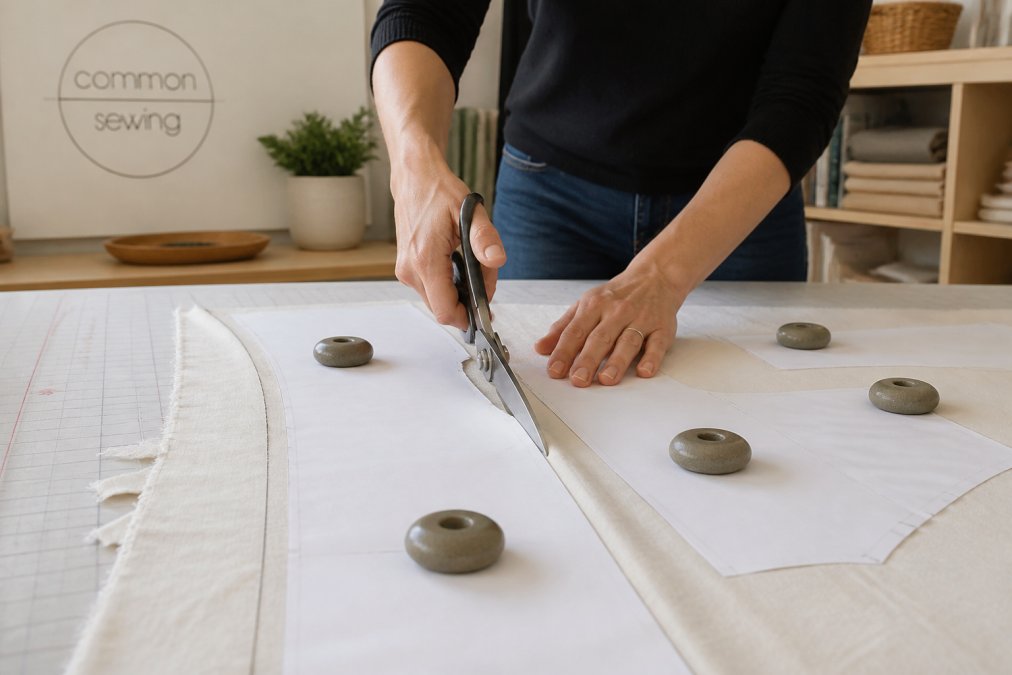
Once cut, remove pattern pieces carefully and lay out your fabric pieces. Check that all markings transferred clearly. Missing marks create confusion during sewing.
Common Sewing teaches this process step-by-step in a structured way that builds your confidence. Rather than jumping between random tutorials, you learn pattern reading, fabric preparation, and cutting technique in the order that makes sense.
Frequently Asked Questions
What do the symbols on a sewing pattern mean?
Sewing pattern symbols communicate essential information about construction. Notches mark matching points between pieces, darts create shaping, and fold lines show where fabric bends. Grainline arrows indicate fabric direction for proper drape. The pattern envelope explains all symbols used in that specific pattern. Learning these markings prevents fitting problems and ensures pieces align correctly during assembly.
How do you prepare fabric for a sewing pattern?
Start by washing and drying fabric according to fiber content to prevent shrinkage after sewing. Press out wrinkles with an iron. Check the grainline direction and lay out pattern pieces following the cutting layout provided in the pattern envelope. This layout shows the most efficient arrangement and ensures all pieces run in the correct direction. Pin or use pattern weights to hold pieces firmly in place before cutting.
Do you need to add seam allowance to sewing patterns?
Most commercial sewing patterns include seam allowance already built in, typically 5/8 inch. Check your pattern envelope to confirm. When you cut fabric using the pattern outline, you're cutting seam allowance included. However, some patterns specify different seam allowances for specific seams, so always read instructions carefully before cutting.
Ready to sew your first project with confidence? Common Sewing provides structured, project-based instruction from an experienced tailor who breaks down every step. Sign up with your email address to receive news and updates about how to master sewing patterns and create garments you'll love wearing.