 comparison
Online Sewing Class Price Comparison
Table of Contents
- Online Sewing Class Price Comparison: What You Pay and Why
- Best Structured Sewing Courses for Beginners
- Sewing Class Subscription vs. One-Time Purchase Models
- Frequently Asked Questions
Last Updated: September 18, 2026
Online Sewing Class Price Comparison: What You Pay and Why
Online sewing class pricing varies, but what matters is progressive skill-building that matches your learning style.
Best Structured Sewing Courses for Beginners
Structured sewing courses build skills progressively through projects, unlike YouTube tutorials that jump randomly between techniques.
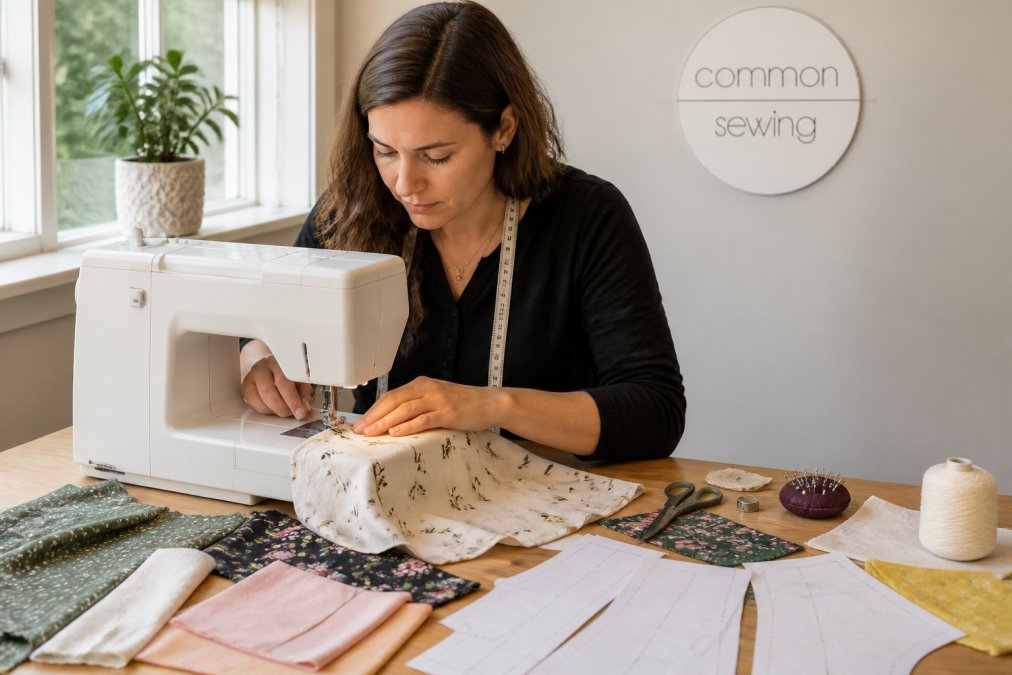
Common Sewing uses project-based learning with clear progression from foundational skills to garment projects, taught by Bonnie, a professional tailor with 25 years of experience.
Craftsy and Creativebug offer extensive libraries but lack structured progression, mirroring the YouTube problem.
University of Fashion focuses on professional garment construction, assuming you've mastered beginner fundamentals.
Alison Smith's School of Sewing specializes in traditional tailoring for advanced sewists.
Sewing Class Subscription vs. One-Time Purchase Models
Subscriptions charge monthly or annually for ongoing access; one-time purchases let you pay once and own the course permanently.
Sign up with your email address to receive news and updates. →
Subscriptions work for long-term hobbyists with access to new content and pause options.
One-time purchases suit goal-focused learners with no recurring charges, though you lose access if the platform shuts down.
Model | Best For | Cost Structure | Access |
|---|---|---|---|
Subscription | Ongoing learners, hobby sewists | Monthly/annual recurring | Continuous, new content added |
One-time purchase | Goal-focused learners, specific projects | Single payment | Permanent (platform dependent) |
Membership (mixed) | Serious students, professional goals | Tiered pricing | Varies by tier |
Common Sewing operates as a structured program, you invest in a complete curriculum rather than renting access to a massive library.
Ready to stop jumping between random sewing tutorials and start building real skills? Common Sewing's project-based curriculum, taught by a professional tailor with 25 years of experience, replaces fragmented free content with a clear path from beginner to confident sewist. You'll learn to repair your favorite pieces, create handmade gifts, and eventually tailor your entire wardrobe, all without the overwhelm of choosing between hundreds of unrelated videos. Sign up with your email address to receive news and updates and start your structured sewing journey.
Frequently Asked Questions
What is the average cost of an online sewing class?
Online sewing class pricing varies widely depending on the model. Subscription-based platforms often offer unlimited access to video libraries and tutorials. One-time course purchases often cost more upfront but provide lifetime access. For structured, beginner-focused programs with instructor support, costs tend to be higher. Visit Common Sewing's website to see current pricing for their step-by-step, project-based curriculum.
Should I choose a subscription or one-time purchase for sewing lessons?
Subscription models work best if you plan to explore multiple techniques, garment construction methods, and ongoing skill development. One-time purchases suit learners who prefer to complete a structured curriculum at their own pace without recurring fees. Consider your learning style: if you thrive with variety and continuous new content, a subscription offers flexibility. If you want a defined path from beginner basics to advanced tailoring, a comprehensive one-time course may deliver better value and avoid subscription fatigue.
How long does a beginner sewing course typically take to complete?
Beginner sewing course duration depends on the curriculum structure and your pace. Project-based programs usually span 8 to 12 weeks when followed consistently, building skills through hands-on garment construction. Self-paced options allow faster or slower progression based on your schedule. Most beginners need 20 to 40 hours of instruction and practice to master basic sewing techniques, seam allowance, stitch types, and simple pattern fitting. Structured programs designed to replace fragmented tutorials often condense this timeline by providing clear learning outcomes and progression checkpoints.