 how-to
How to Build a Basic Sewing Kit for Mending
Table of Contents
- Beginner Sewing Kit Essentials: What You Actually Need
- Hand Sewing Supplies for Clothes: Needles and Thread
- Organize and Store Your Mending Kit
- Frequently Asked Questions
Last Updated: October 5, 2026
Beginner Sewing Kit Essentials: What You Actually Need
Learning how to build a basic sewing kit for mending doesn't need to be complicated. You need just a handful of tools to fix most common clothing problems. At Common Sewing, we help beginners build confidence by starting with the essentials and adding tools only when you need them.
Here's what actually belongs in a beginner sewing kit for mending:
- Hand-sewing needles (sizes 7-10 for most fabrics)
- Thread in neutral colors (black, white, tan, navy)
- Small scissors dedicated to fabric
- Straight pins or safety pins
- Seam ripper for removing old stitches
- Measuring tape
- Pin cushion or safe storage
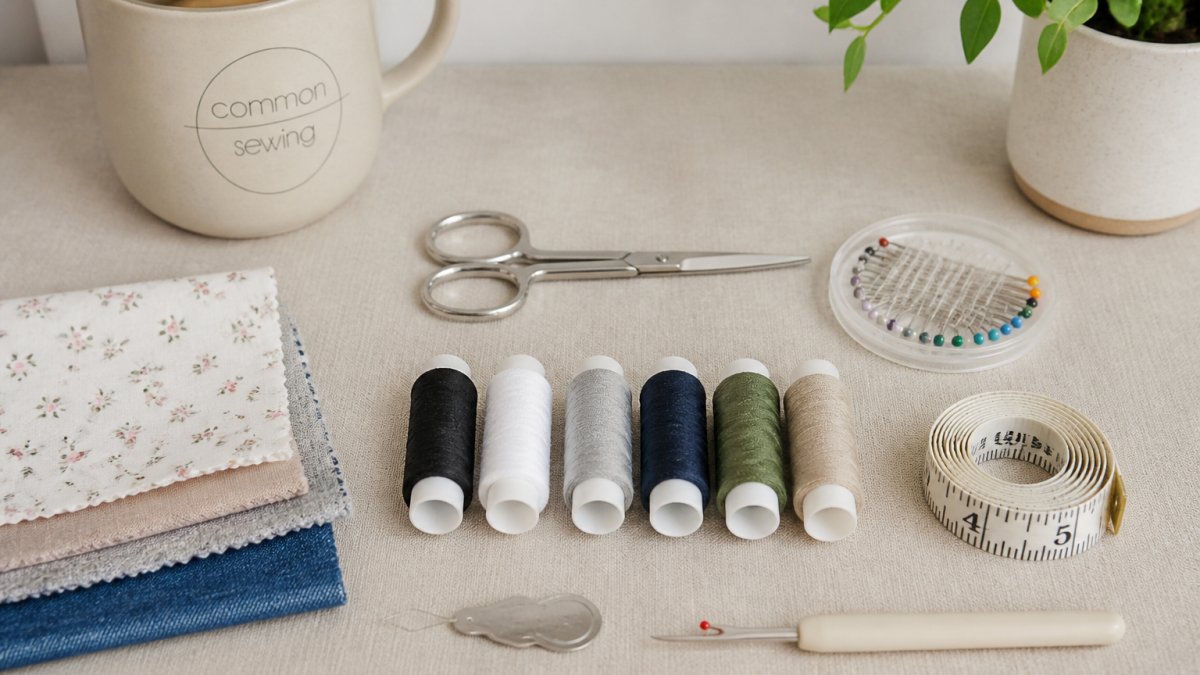
The mistake most beginners make is buying too much at once. You'll use these seven items for 90% of your mending work. Everything else is optional until you've actually tried sewing.
Hand Sewing Supplies for Clothes: Needles and Thread
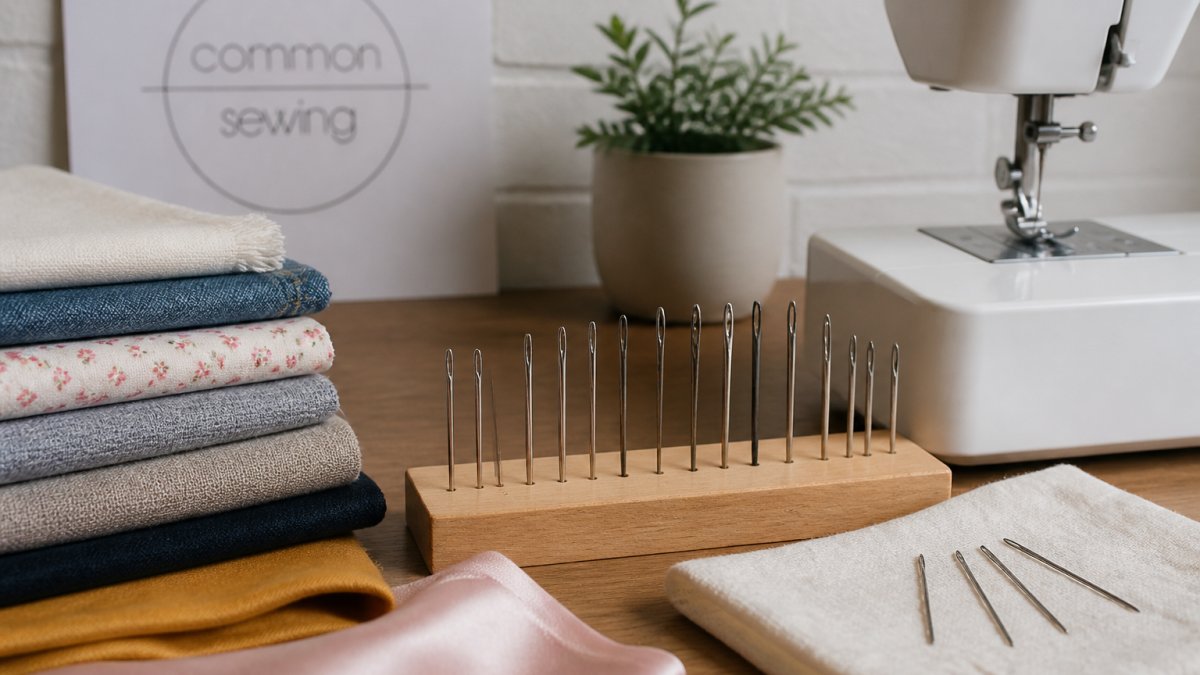
The right needle and thread combination makes mending feel easy instead of frustrating. Hand-sewing needles come in different sizes, and the size matters more than most guides admit.
Needle sizes for common repairs:
- Size 7-8: Medium weight fabrics (cotton, linen, blends)
- Size 9-10: Lightweight fabrics (silk, thin cotton)
- Size 5-6: Heavy fabrics (denim, canvas)
Thread color should match your fabric. If you can't find an exact match, go one shade darker rather than lighter. The best thread for mending clothes is standard all-purpose polyester thread, it's strong, affordable, and works on almost everything.
Sign up with your email address to receive news and updates. →
Organize and Store Your Mending Kit
How you store your sewing kit after learning how to build a basic sewing kit for mending determines whether you'll actually use it. A kit scattered across three drawers gets ignored. A kit in one place gets used.
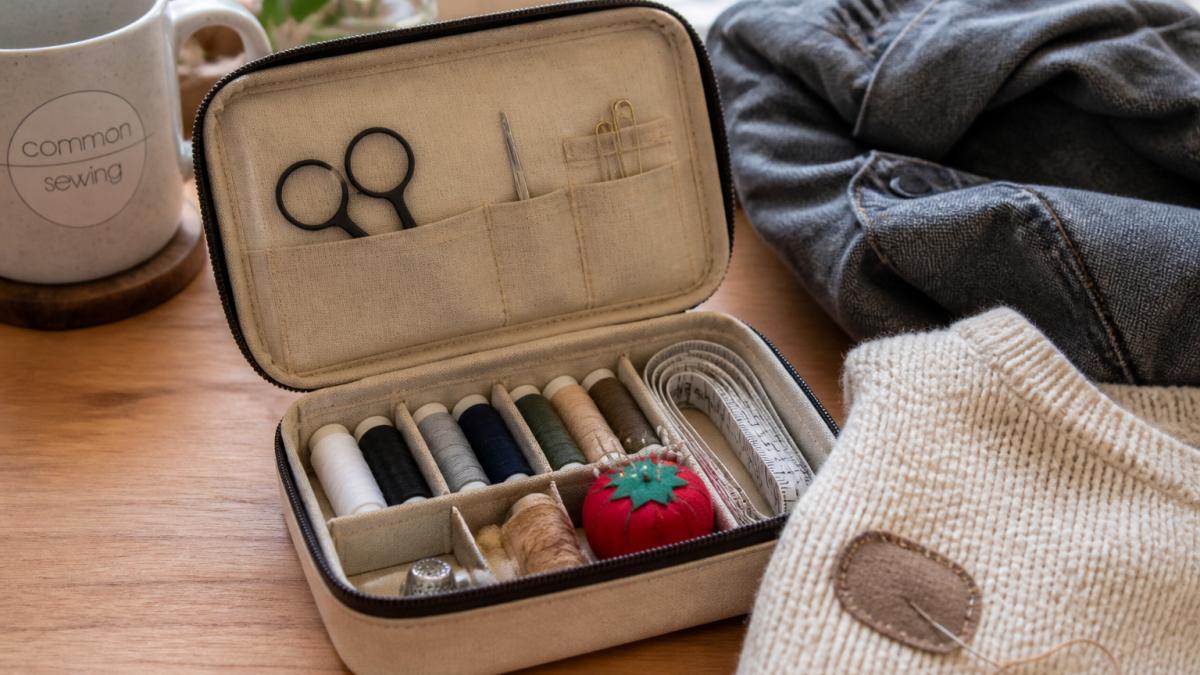
Keep your mending kit in a small basket, pouch, or box. Store it somewhere you see it regularly. Thread should be wound neatly on bobbins or spools to prevent tangling. Needles belong in a pin cushion or needle case, never loose in a box. Scissors need a dedicated spot so you don't accidentally grab kitchen shears (which will dull quickly on fabric).
Frequently Asked Questions
What supplies do you need to mend clothes by hand?
A basic sewing kit for mending includes hand-sewing needles, thread in neutral colors, small scissors, straight pins, a seam ripper, measuring tape, and a pin cushion and a small storage container. These essentials cover most common repairs like fixing hems, reattaching buttons, and closing seams without requiring a sewing machine.
How do I match thread and needles to the fabric I'm mending?
Choose thread that matches your fabric color as closely as possible. For needle selection, use smaller needles (sizes 7-9) for delicate or lightweight fabrics like cotton and silk. The needle should pass through the fabric smoothly without forcing.
Can I start mending clothes with just a basic sewing kit?
Yes. A basic sewing kit is designed for beginners and covers all common clothing repairs. You can mend tears, replace buttons, fix hems, and close seams with just the essentials. As you gain confidence and tackle more advanced projects, you can add specialized tools. Starting with the basics helps you build skills without overwhelming yourself with unnecessary supplies.
Ready to move beyond basic mending? Common Sewing's step-by-step program teaches you how to repair your favorite pieces with confidence, create handmade gifts, and eventually tailor clothes to fit perfectly. Start with the fundamentals and build real skills one project at a time.