 how-to
How to Choose Sewing Needles for Different Fabrics
Table of Contents
- Understanding Sewing Machine Needle Types
- Sewing Machine Needle Sizes Explained
- Matching Needles to Fabric: A Practical Guide
- Frequently Asked Questions
Last Updated: October 9, 2026
Understanding Sewing Machine Needle Types
Understanding how to choose sewing needles for different fabrics affects stitch quality, fabric damage, and whether your project looks professional.
The universal needle works across many fabrics, but "reasonably well" isn't "best." Ballpoint needles have a rounded point that slides between fibers, ideal for knits and stretch materials like jersey and spandex; a sharp needle causes skipped stitches and puckering. Sharp needles have a fine tip for wovens like cotton and linen. For specialty work, quilting needles have a reinforced shaft for layers, denim needles are extra-sturdy for heavyweights, and embroidery needles have a larger eye for decorative thread.
Sewing Machine Needle Sizes Explained
Needle size determines fabric penetration and thread stress, written as 80/12 (European/American). Size 60/8 suits delicate silks and sheers, 80/12 is universal, 90/14 handles medium weights like quilting cotton, 100/16 tackles denim and canvas, and 110/18 is for extra-heavy materials. Use the smallest needle that penetrates cleanly without bending; thicker thread needs a larger eye to prevent shredding.
Matching Needles to Fabric: A Practical Guide
The real skill is matching needle types to your specific fabric, where most beginners struggle. Identify your fabric construction: woven (cotton, linen, silk) has threads crossing at right angles, while knit (jersey, interlock, ribbing) has interlocking loops that stretch and snag with the wrong needle.
For wovens, use a sharp needle: 60/8 or 70/10 for lightweight voile, 80/12 for quilting cotton, and 90/14 or larger for heavy linen or canvas. For knits, use ballpoint: 80/12 for jersey, 90/14 for heavier knits and spandex blends. Stretch fabrics benefit from a stretch needle with a special scarf that prevents skipped stitches.
Sign up with your email address to receive news and updates. →
| Fabric Type | Best Needle Type | Recommended Size | Why This Works |
|---|---|---|---|
| Cotton, linen (woven) | Sharp | 80/12 - 90/14 | Sharp point pierces cleanly |
| Jersey, knit | Ballpoint | 80/12 - 90/14 | Rounded point slides between fibers |
| Stretch, spandex | Stretch | 90/14 - 100/16 | Special scarf prevents skipped stitches |
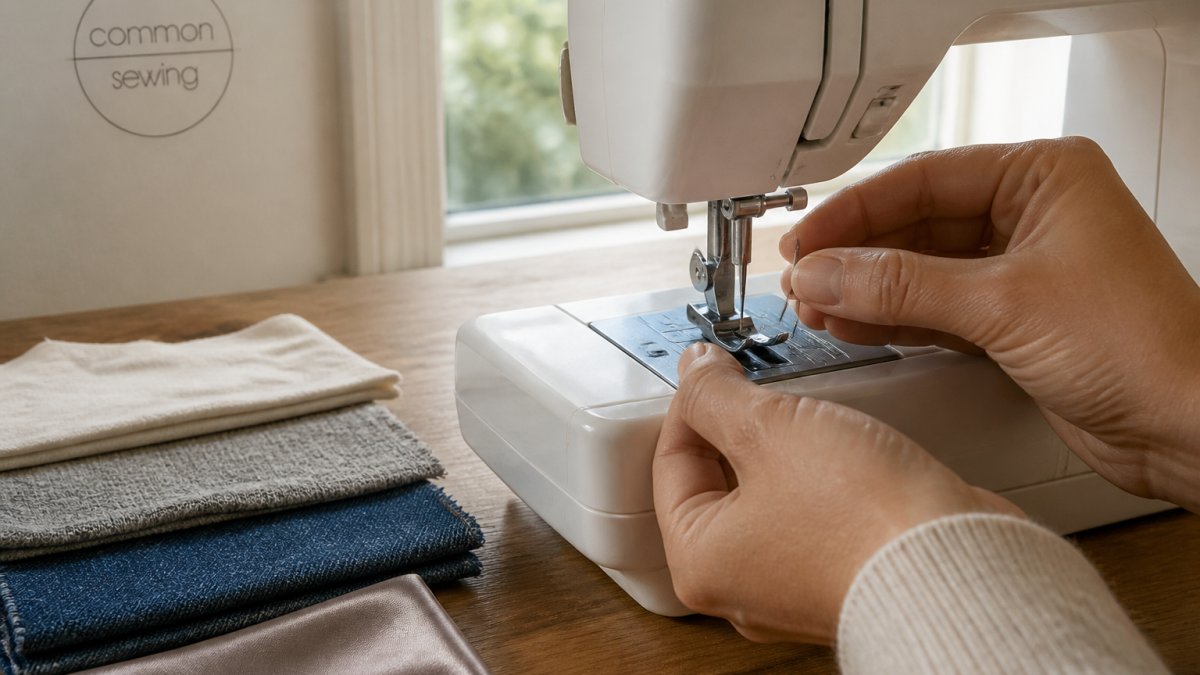
Test on scrap fabric first: skipped stitches, puckering, or visible holes mean adjusting your needle type or size. In a structured program, you'll practice how to choose sewing needles for different fabrics with real projects, building confidence faster than memorizing charts.
Frequently Asked Questions
How do I know what type of sewing needle to use for my fabric?
Match your needle to your fabric's structure and weight. Woven fabrics like cotton and linen need universal or sharp needles. Knit and stretch fabrics require ballpoint or stretch needles that slide between fibers instead of piercing them. Heavyweight fabrics like denim need denim or topstitching needles with reinforced shafts. Start by identifying whether your fabric is woven, knit, or specialty, then select the needle type designed for that category.
What is the difference between an 80/12 and 90/14 sewing machine needle?
The numbers indicate needle size: 80/12 is smaller and thinner, while 90/14 is larger and thicker. Use 80/12 for lightweight fabrics like silk, voile, and fine cotton blends. Use 90/14 for medium-weight fabrics like quilting cotton and linen. The larger needle creates bigger stitches and handles thicker thread, while the smaller needle produces finer stitches on delicate materials.
When should you change a sewing machine needle?
Change your needle after every 8-10 hours of sewing, or when you notice skipped stitches, puckering, or snagging. A dull or bent needle damages fabric and creates poor stitch quality. Also change needles when switching between fabric types, as the wrong needle for your new fabric will cause problems immediately. Keeping fresh needles on hand prevents frustration and protects your projects.
Choosing the right needle transforms your sewing from frustrating to enjoyable. The difference between a perfect seam and a puckered disaster often comes down to this single decision. Common Sewing's step-by-step curriculum teaches you exactly how to match needles to fabrics through real projects, so you develop this skill naturally rather than through trial and error. Sign up with your email address to receive news and updates about how to build your sewing confidence from the ground up.