 how-to
What to Learn First When Sewing: A Beginner's Guide
Table of Contents
- Start with Your Machine: How to Thread a Sewing Machine
- Master the Straight Seam: How to Sew a Straight Seam
- Essential Sewing Tools for Beginners
- Choosing Fabric and Preparing It Before You Sew
- Easy Sewing Projects for Beginners
- Frequently Asked Questions
Last Updated: October 14, 2026
Start with Your Machine: How to Thread a Sewing Machine
If you are wondering what to learn first sewing, learn your machine before you touch fabric. Thread runs from the spool, through the tension discs, and down to the needle; get the order right and stitches stay even.
- Raise the presser foot and turn the handwheel until the needle is at its highest point.
- Place the spool on the pin, pull thread through the first guide, down through the tension discs, up and around the take-up lever.
- Thread any lower guides, push the thread through the needle eye from front to back, pull about 15 centimeters through and wind the bobbin if needed.
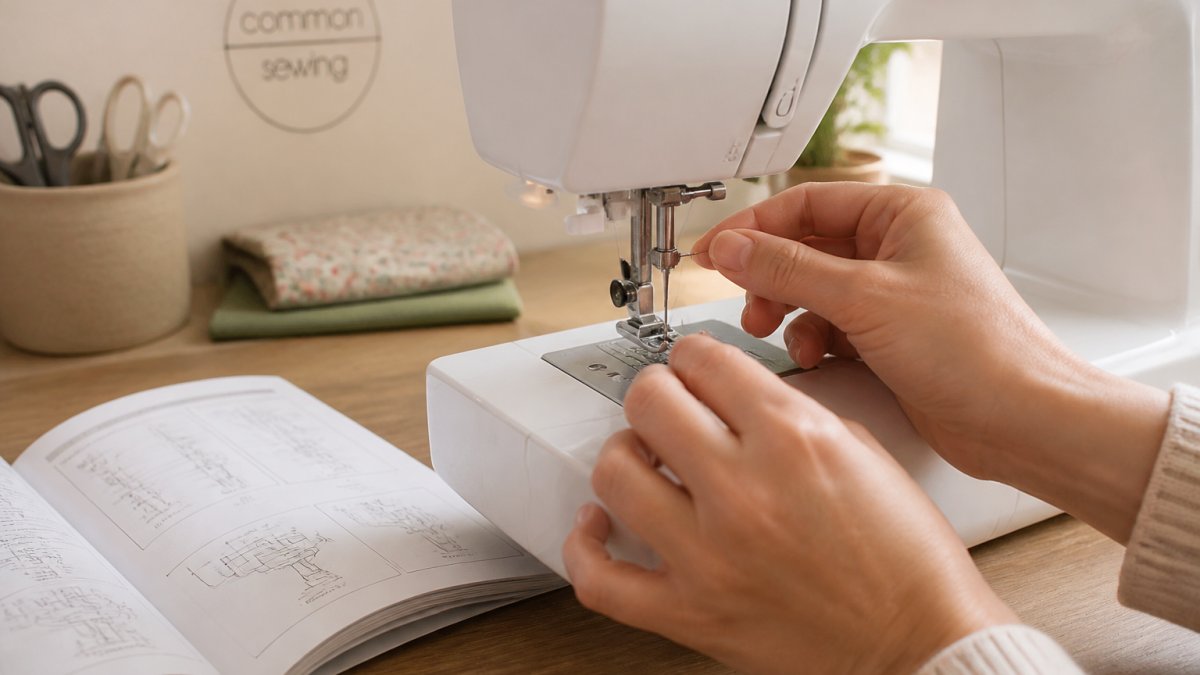
Once the needle is threaded and the bobbin is in, you are ready to sew. Common Sewing offers a good how to use your sewing machine guide.
Master the Straight Seam: How to Sew a Straight Seam
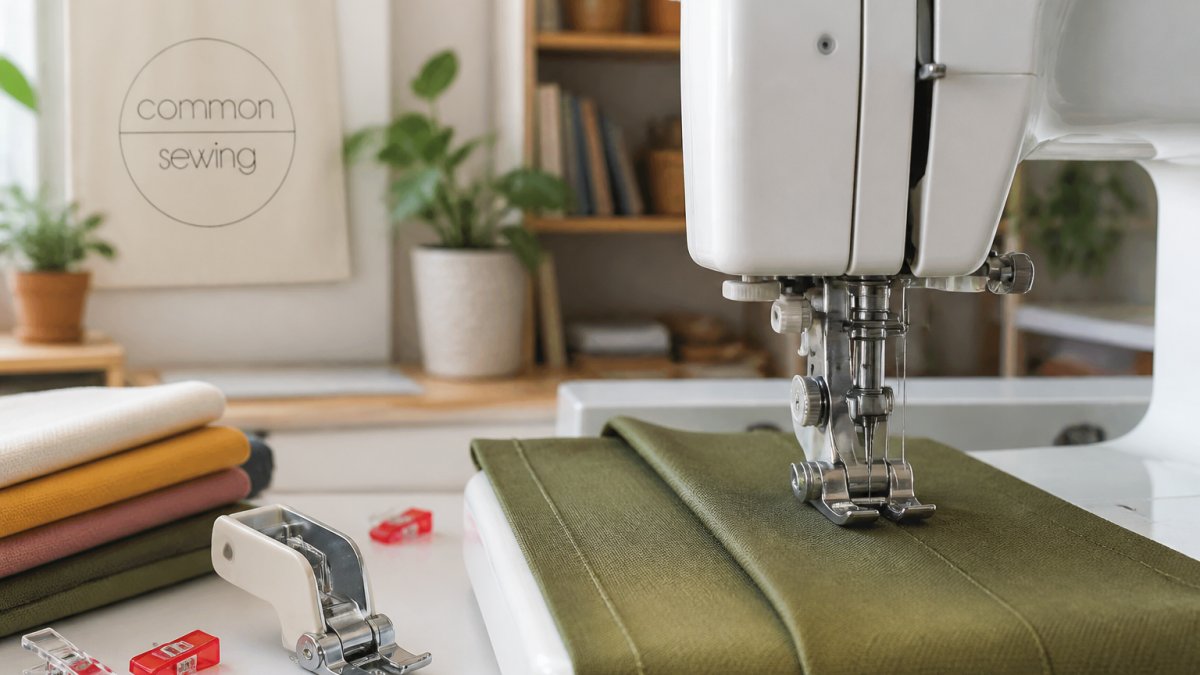
A straight seam is the foundation of every project: control speed, guide fabric, keep an even seam allowance, the distance between your stitch line and the fabric edge. Mark the standard allowance on your machine bed with tape.
- Pin two scrap pieces right sides together and line the raw edges up with your seam guide.
- Lower the needle, press the pedal gently, and guide with light hands, letting the machine pull the fabric.
- Stop and press the reverse lever to backstitch.
Backstitch locks the seam with a few backward stitches at each end; skip it and your seam unravels on the first wash. Practice with five straight 15-centimeter lines, then a curve, then a corner with the needle down.
Essential Sewing Tools for Beginners
Essential sewing tools for beginners fit in one small box and cost far less than people expect, buy the basics, add the rest as projects demand.
- Fabric scissors, kept separate from paper.
- Measuring tape for body and fabric measurements.
- Pins and a pin cushion for holding pieces together.
- A seam ripper for undoing mistakes.
- Marking tools such as chalk or a washable pen.
- A cutting mat and rotary cutter for clean, fast cuts.
- An iron for pressing seams flat.
A common mistake is buying a huge kit and using half of it. Start with the list above and add a simple pattern once you can sew a straight seam.
Sign up with your email address to receive news and updates. →
Choosing Fabric and Preparing It Before You Sew
Fabric choice decides how easy your first project feels: woven cotton is stable and forgiving, while stretchy knits are harder, so save them for later. Fabric grain is the direction threads run in the cloth, and cutting along it keeps pieces from twisting after washing.
Prewash and dry fabric before cutting to shrink it and remove finishes, then press it flat. Measure twice, mark once, pin before you cut, sloppy measuring causes most "why doesn't this fit" moments.
Easy Sewing Projects for Beginners
Easy sewing projects for beginners should match your current skill, not your ambition. Start with a pillowcase for straight seams and corners, then a tote bag for handles and topstitching, a simple skirt for measuring and fit, and a basic shirt once seams and hems feel natural.
If you get stuck, check threading, then tension, then the needle, a dull or bent needle causes skipped stitches and a loose bobbin causes tangles. Common Sewing teaches through projects, one skill at a time, so each piece builds on the last. Bonnie, a photo shoot tailor with 25 years of experience, leads the program, and the goal is confidence you can feel at the machine.
Frequently Asked Questions
Is it easy to start sewing?
Yes, sewing is very approachable for beginners. The key is to start with a clear sequence: first, learn to thread your machine and wind a bobbin. Next, practice sewing a straight seam on scrap fabric until you are consistent. Then, choose a simple project like a pillowcase. Starting with these fundamentals builds confidence and prevents the frustration that comes from jumping into complex patterns too soon.
What are the essential sewing supplies for beginners?
You only need a few essential sewing tools for beginners to start. Besides a sewing machine, you will need a measuring tape, fabric scissors, a seam ripper, pins, hand sewing needles, and thread. A rotary cutter and cutting mat are helpful but not required for your first projects. For fabric, start with a woven cotton, which is stable and easy to handle. These tools cover measuring, cutting, and stitching.
What is the easiest first sewing project?
The easiest first sewing project is a simple pillowcase or a tote bag. These projects use only straight seams, require minimal measuring, and let you practice handling fabric without the complexity of a pattern. A pillowcase is a great choice because you can see your progress quickly. Avoid projects with curves, zippers, or buttonholes until you are comfortable with a straight stitch and consistent seam allowance.
Sewing gets frustrating when tutorials jump around and nothing connects. Common Sewing fixes that with a step-by-step, project-based program that builds skills in the right order, from threading to tailoring. You get instruction from a professional photo shoot tailor, a clear curriculum, and the confidence to repair, gift, and tailor your own clothes. Get started with Common Sewing and turn that closet machine into finished projects you are proud of.