 how-to
Learn Sewing Without Frustration: A Beginner's Path
Table of Contents
- How to Learn Sewing Without Frustration: Start With Realistic Expectations
- Essential Sewing Tools for Beginners and Why They Matter
- Common Sewing Mistakes to Avoid When You're Starting Out
- How Long Does It Take to Learn to Sew and Progress Through Projects
How to Learn Sewing Without Frustration: Start With Realistic Expectations
Learning to sew without frustration begins by accepting that mastery takes time. Most beginners expect polished garments within weeks, but you're building muscle memory, learning to read patterns, and developing fabric intuition. Mistakes, tangled threads, and puckered seams aren't failures, they're practice.
The biggest mistake is comparing your Day 30 to someone else's Year 3. When you expect these moments instead of dreading them, frustration loses its power. Start with weekend-sized projects, choose forgiving fabrics, and build confidence through repetition.
Essential Sewing Tools for Beginners and Why They Matter
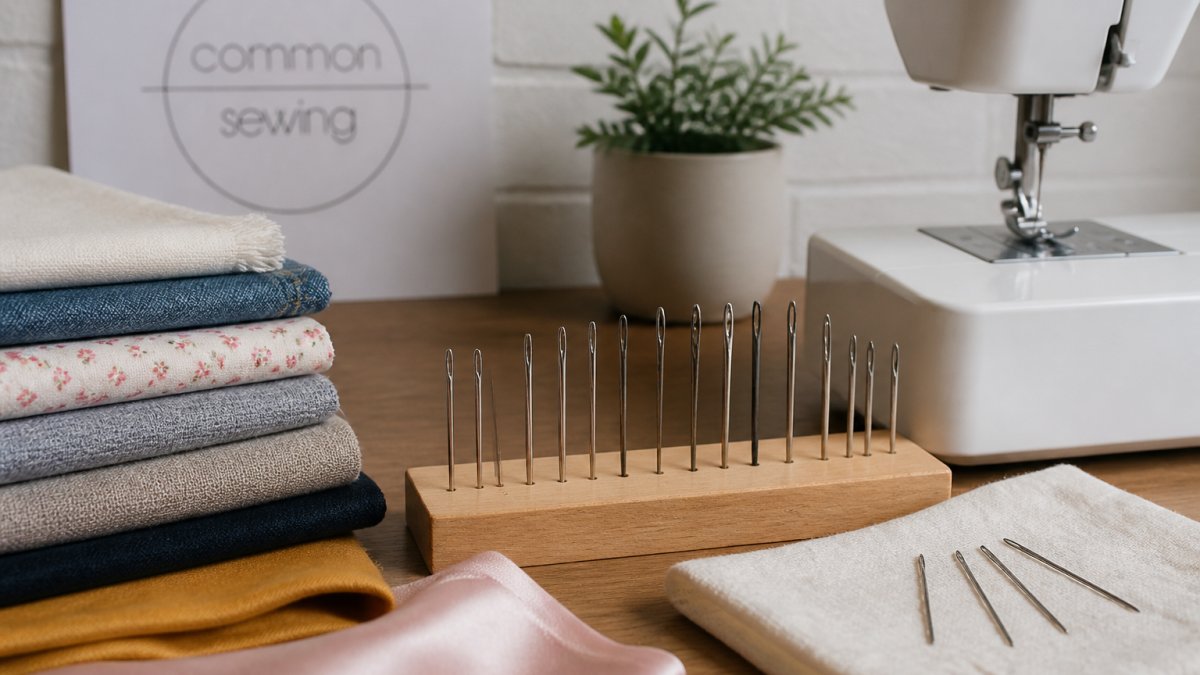
You don't need an expensive setup to learn sewing. A seam ripper lets you remove wrong stitches cleanly without damaging fabric. Threading your machine correctly prevents half the problems beginners encounter, spend five minutes learning your specific machine's threading sequence from the manual. Fabric scissors cut differently than paper scissors because fabric requires a different blade angle.
Presser foot pressure affects stitch quality directly; too tight bunches fabric, too loose skips stitches. Stitch length controls stitches per inch; longer stitches are more forgiving for beginners. Needle size must match your fabric weight, a heavy needle on lightweight fabric creates visible holes. Backstitching at the start and end of seams locks stitches so they don't unravel.
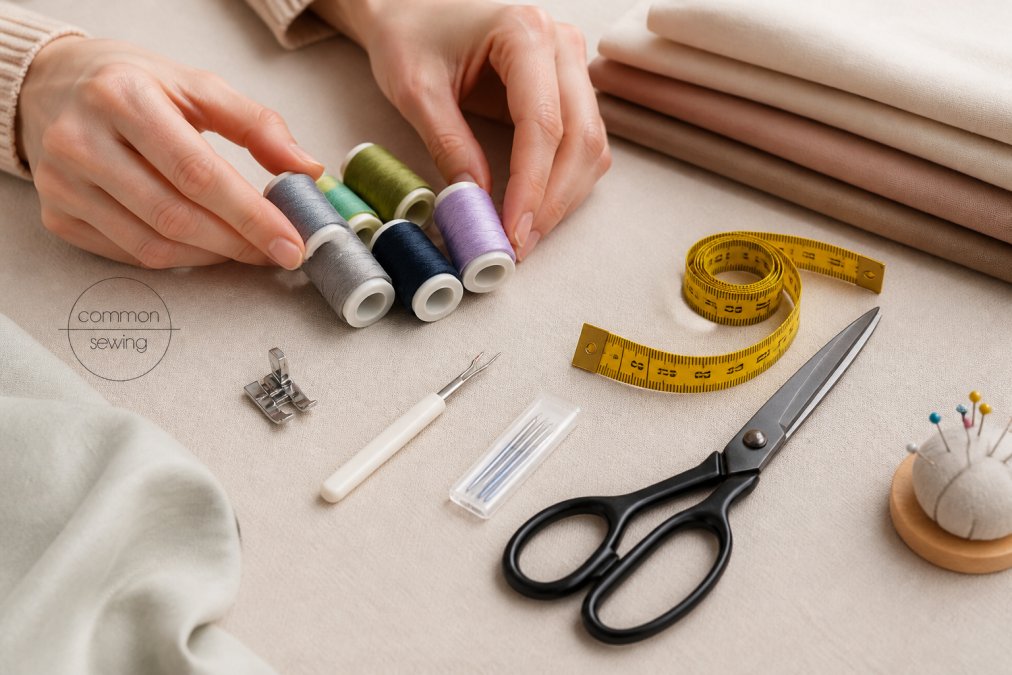
Quality thread prevents frustration that feels like a machine problem. Cheap thread breaks, knots, and creates uneven stitches. Invest in decent thread and watch how much smoother your sewing becomes.
Common Sewing Mistakes to Avoid When You're Starting Out
Skipping pattern instructions is the fastest way to create problems. Patterns specify seam allowance, the space between your stitching line and fabric edge. Ignoring this means pieces won't fit together properly.
Choosing projects too advanced for your skill level creates a frustration spiral. Start with simple straight stitch projects like pillowcases before attempting shirts or tailored trousers. Fabric selection makes or breaks beginner projects. Knit fabrics stretch and require special needles (textileexchange.org). Slippery fabrics like silk slide around while cutting and sewing. Start with cotton or cotton blends that behave predictably.
Pressing seams flat before crossing them with new seams creates stronger, flatter construction and prevents puckered seams. Not maintaining your machine creates problems that feel like operator error. Lint builds up inside the bobbin area and causes tension issues (aafcs.org). A clean machine with a fresh needle performs dramatically better than a neglected one.
Sign up with your email address to receive news and updates. →
How Long Does It Take to Learn to Sew and Progress Through Projects
Your first project typically takes 3-8 hours depending on complexity. A simple pillowcase might take 3 hours; a basic skirt might take 8-12 hours across multiple sessions.
Skill progression isn't linear. You'll hit plateaus where nothing feels easier, then suddenly something clicks and three new techniques become obvious. Most beginners need 20-30 hours of actual sewing time before basic tasks feel automatic (peer-reviewed research). Consistency matters more than raw hours. Someone who sews four hours a week for six weeks develops more skill than someone who sews 24 hours in one weekend.
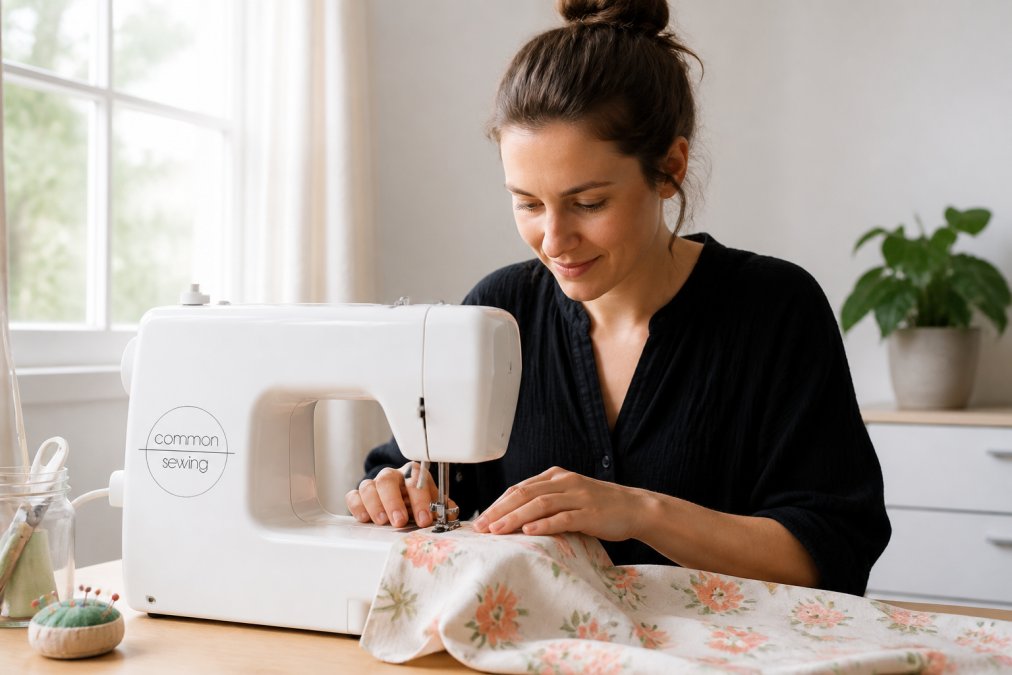
Project progression should move deliberately. Start with straight stitches on scrap fabric, move to a simple project using only straight stitch, then add curves, multiple seams, and fitting adjustments. Each step builds on the previous one.
Learning to sew without frustration is entirely within your reach. The path requires patience, realistic project selection, and treating mistakes as information rather than failure. Common Sewing's structured, project-based method guides you through this progression deliberately, building confidence with each completed project. Start with the right expectations, choose beginner-friendly projects, and give yourself permission to learn at your own pace. The skills you develop become tools you'll use for decades.
Frequently Asked Questions
Q: What is the easiest way to start sewing for beginners?
A: Start with a structured program that teaches one skill at a time, beginning with basic machine operation and simple stitches like the straight stitch. Choose beginner-friendly projects with clear pattern instructions rather than jumping between random YouTube tutorials. Focus on threading the machine correctly, understanding presser foot control, and practicing stitch consistency before moving to complex garments. A step-by-step approach removes decision fatigue and builds confidence faster than fragmented learning.
Q: How long does it take to learn to sew basic projects?
A: Most beginners can complete their first simple project in 2-4 weeks with consistent practice. Mastering fundamental skills like bobbin tension, backstitching, and seam allowance takes about 4-6 weeks. Progressing to more complex garments like tailored pieces typically requires 3-6 months of regular practice. The timeline depends on your practice frequency and willingness to troubleshoot issues when they arise. Patience and realistic expectations prevent frustration during this learning phase.
Q: What are the most common sewing mistakes beginners make?
A: Common mistakes include incorrect needle size for fabric type, improper bobbin tension causing loose stitches, and skipping backstitching at seam ends. Many beginners also ignore seam allowance measurements, leading to garments that don't fit. Poor fabric grain alignment and rushing through pattern instructions cause wasted fabric scraps and failed projects. The biggest mistake is attempting advanced projects before mastering basic machine skills. Understanding these pitfalls upfront helps you avoid frustration and fabric waste.
This article was written using GrandRanker