 ultimate-guide
Professional Sewing Skills for Hobbyists: 2026 Guide
Table of Contents
- Building Professional Sewing Skills: Your Foundation
- How to Tailor Clothes at Home for a Custom Fit
- Essential Sewing Tools for Professional Finishes
- Advanced Garment Construction Techniques
- Frequently Asked Questions
Last Updated: September 12, 2026
Building Professional Sewing Skills: Your Foundation
Professional sewing skills for hobbyists start with one shift in mindset: you are no longer collecting tips, you are building a system. This guide from Common Sewing covers the foundation first, then moves into tailoring and the tools that separate clean work from homemade work.
Most hobbyists plateau because they learn techniques out of order. A structured path fixes that. It is the difference between owning a machine and knowing how to use it.
How to Tailor Clothes at Home for a Custom Fit
Tailoring clothes at home means adjusting an existing garment to your body, not building one from scratch. It is the fastest way to see professional results, and it teaches fit faster than any pattern project.
Start with these steps:
- Pin the garment on your body or a dress form and mark where it pulls or gaps
- Baste the new seam line by hand before touching the machine
- Try it on again, then stitch permanently
- Press each seam as you go, never at the end
Essential Sewing Tools for Professional Finishes
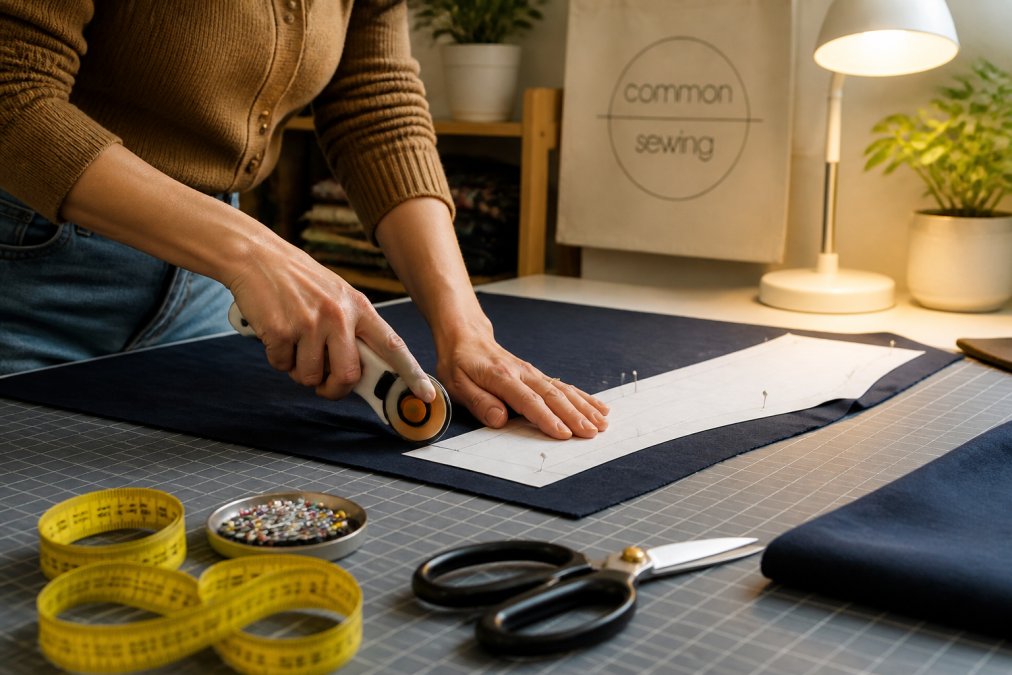
The tools that matter most are the ones that control precision: a rotary cutter, a clear ruler, sharp shears, and a good iron. A presser foot you trust matters more than a machine with extra stitches.
Advanced Garment Construction Techniques
Once the basics hold, advanced work is about control. French seams and flat-felled seams enclose raw edges without a serger. Staystitching keeps curved edges from stretching before you sew them. Understitching stops facings from rolling to the outside (extension.uga.edu).
These are the techniques that read as professional-grade, and they all depend on consistent seam allowances and correct stitch length.
Frequently Asked Questions
How can I learn how to sew professionally?
Start by mastering foundational professional sewing skills like consistent seam allowances, stitch settings, and pressing. Move on to advanced garment construction techniques and how to tailor clothes at home. A structured, project-based program can help you build these skills in the right order. With practice, you can learn to create garments with a professional finish.
What are some advanced sewing techniques?
Advanced techniques include tailoring for a custom fit, using French seams and flat-felled seams for a clean interior. These skills build on a foundation of precision cutting and pressing.
How do I achieve a professional finish on handmade garments?
Master understitching, staystitching, and notching to reduce bulk. Consistent pressing at every stage is critical.