 listicle
Sewing Patterns for Absolute Beginners: 2026 Guide
Table of Contents
- Essential Sewing Tools for Beginners
- How to Read a Sewing Pattern
- Easy Sewing Projects for Beginners
- Frequently Asked Questions
Last Updated: September 16, 2026
Essential Sewing Tools for Beginners
The right tools and sewing patterns turn a frustrating first project into a finished one. Gather fabric shears, a seam ripper, pins, a measuring tape, tailor's chalk, and a rotary cutter if your budget allows.
Common Sewing built its beginner program around mastering tools first, then techniques. A common mistake is buying a machine and nothing else.
Learn the presser foot, bobbin winding, thread tension, and stitch length before your first project. According to the American Sewing Guild's beginner resources, understanding your machine's tension settings prevents most early stitching problems. Keep a small kit nearby: seam ripper, extra bobbins, and a lint brush.
How to Read a Sewing Pattern
A sewing pattern is a printed template plus an instruction sheet telling you which fabric pieces to cut, how to assemble them, and what seam allowance to use. Once you can read one, you can read them all.
The envelope back lists sizing, recommended fabrics, and notions; inside, pattern markings include grainline arrows, darts, notches, and cutting layouts, with numbered construction steps.
Pattern Element | What It Tells You | Why Beginners Miss It |
|---|---|---|
Grainline arrow | How to align the piece with the fabric's selvage | Fabric stretches wrong if ignored |
Seam allowance | How much fabric sits inside the seam | Assuming 5/8 inch on every pattern |
Notches | Where two pieces join | Skipping them causes mismatched seams |
Measure yourself before choosing a size, pattern sizing rarely matches ready-to-wear. For PDF patterns, print a test page to confirm the scale.
Easy Sewing Projects for Beginners
Start with projects that teach one skill at a time: a pillowcase teaches straight stitch and hemming, a tote bag adds boxed corners and interfacing, and an elastic-waist skirt introduces bias tape and finishing edges.
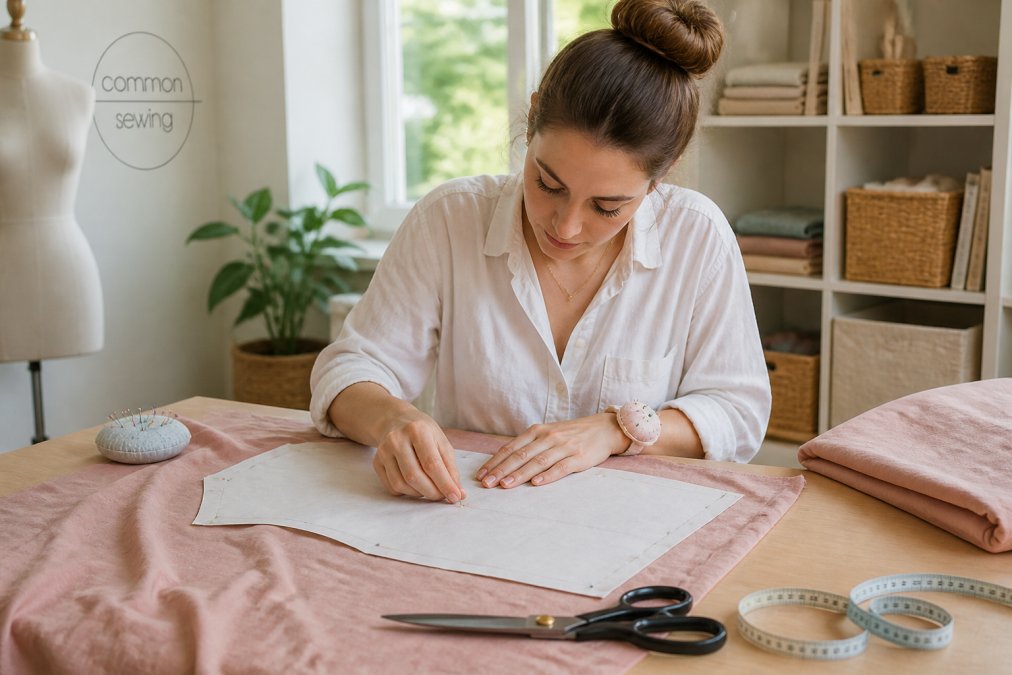
Cotton lawn and quilting cotton are forgiving first fabrics; save jersey knit and slippery fabrics until your tension and stitch length feel automatic. Backstitch at the start and end of every seam.
Free sewing patterns from Mood Sewciety, SewCanShe, and Polka Dot Chair give you practice material at no cost. Tilly and the Buttons starts around $15, Love Notions runs frequent $5 sales, and Ellie and Mac offers patterns for as little as $2. Simplicity's New Look and Kwik Sew sell clear paper patterns in craft stores.
For structure rather than scattered tutorials, Common Sewing's project-based program walks you through each skill in order, taught by a photo shoot tailor with 25 years of experience.
Frequently Asked Questions
What is the easiest pattern to sew for a beginner?
Start with a project that uses straight seams and woven cotton, such as a pillowcase, tote bag, or simple A-line skirt. These patterns avoid zippers, buttonholes, and stretchy fabrics, so you can focus on mastering a straight stitch, seam allowance, and pressing. Once you finish two or three of these, move to a basic top or pull-on pants pattern.
Do I need a sewing machine to use beginner sewing patterns?
Most beginner sewing patterns assume a machine, but you can hand-sew simple projects like pillows or small bags with a backstitch. A basic machine with straight and zigzag stitches handles nearly every starter pattern. If you already own a machine sitting unused, pull it out, thread a fresh bobbin, and test your stitch length and tension on scrap fabric before starting.
How do I choose the right fabric for my first pattern?
Match the fabric to the pattern's recommendation. Woven cotton, cotton lawn, and linen are forgiving for beginners because they don't stretch or curl. Avoid jersey knit and slippery fabrics until you're comfortable with seam allowance and pressing. Check the pattern envelope or PDF for a suggested fabric list, and buy a half-yard extra for testing your stitch settings.
Learning to sew means accepting that your first seam will probably need the seam ripper. That's normal, and it's exactly why a structured path beats piecing together random videos. Common Sewing offers step-by-step, project-based instruction, guidance from a tailor with 25 years of professional experience, and a curriculum designed to build confidence one finished project at a time. Sign up with your email address to receive news and updates and start sewing with ease.