 listicle
Sewing Project Ideas for Absolute Beginners
Table of Contents
- Essential Sewing Tools for Beginners
- Easy Sewing Projects with Straight Lines
- How Long Does It Take to Learn to Sew?
- Frequently Asked Questions
Last Updated: September 14, 2026
Essential Sewing Tools for Beginners
The right tools make beginner sewing project ideas feel manageable instead of frustrating, and the best sewing project ideas start with them. At Common Sewing, we've watched too many people quit because a dull pair of scissors ruined their fabric or a cheap machine jammed at the worst moment. You don't need everything at once, but you do need these core items: a sewing machine with a straight stitch, fabric shears, a seam ripper, pins and a pincushion, a measuring tape, and an ironing board. A rotary cutter and cutting mat help with accuracy, though scissors work fine when you're starting out (Recalls & Product Safety Warnings).
The Consumer Product Safety Commission guidance on craft tool safety reminds beginners to keep sharp tools stored safely, especially in homes with children.
Easy Sewing Projects with Straight Lines
Straight-line projects build muscle memory fast. Start with pillowcases and cushion covers, then move to drawstring bags and pouches. These teach seam allowance, hemming, and backstitch without the pressure of fitting a body.
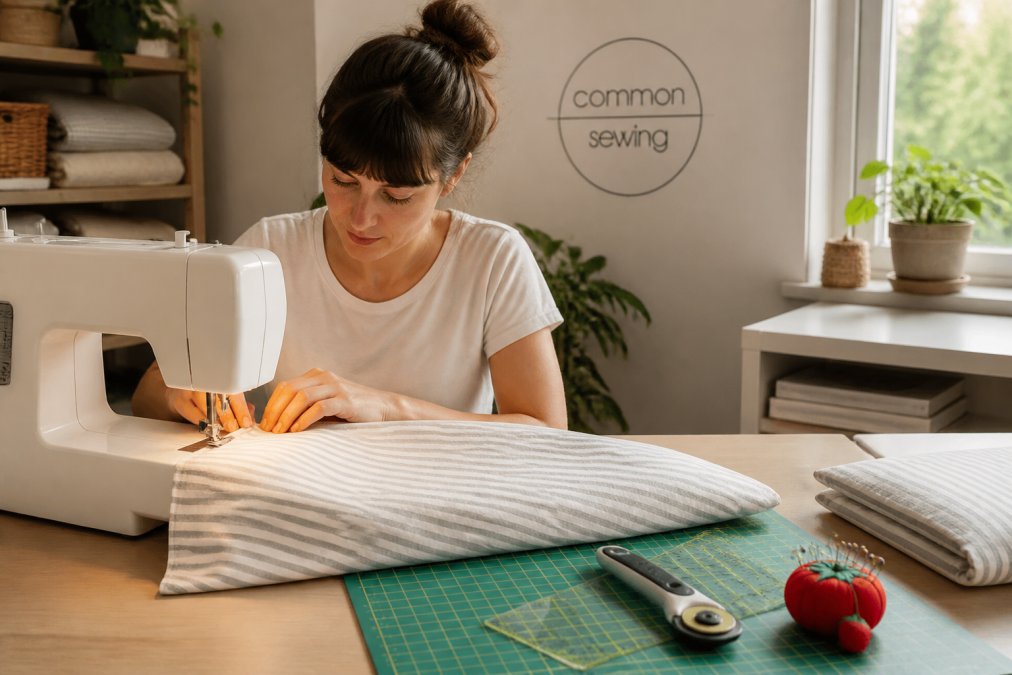
A few projects worth your first weekend:
- Pillowcases, two seams, one hem, done in under an hour
- Drawstring bags, practice casings and threading
- Simple totes, straight seams plus handles
- Scrunchies, tiny, forgiving, great for fabric scraps
- Table runners, long straight hems with no fitting
How Long Does It Take to Learn to Sew?
Most beginners can complete a simple project within a weekend and feel genuinely comfortable at the machine after a few weeks of regular practice. Mastery takes longer, but the early wins come quickly if you stick with structured, project-based learning rather than random tutorials.
The Occupational Safety and Health Administration guidance on home workshop safety applies to any workspace with sharp tools, so set up good lighting and a clear surface before you start.
Frequently Asked Questions
What is the easiest thing to sew for a beginner?
A pillowcase is the easiest first project because it uses only straight stitches and basic seams. You need two rectangles of cotton fabric, a sewing machine, thread, and a measuring tape. Cut your fabric to size, pin the edges, sew a straight line with a 1/2-inch seam allowance, and backstitch at each end. Most beginners finish a pillowcase in under an hour, which builds confidence before moving to drawstring bags or simple clothing items.
What supplies do I need to start sewing?
For essential sewing tools for beginners, you need a sewing machine, fabric shears, a measuring tape, pins and a pincushion, a seam ripper, and thread. A rotary cutter and cutting mat make cutting fabric scraps and cotton fabric much faster. Add an ironing board for pressing seams, which improves every project. Budget-friendly alternatives include using sharp kitchen scissors for fabric and a simple plastic ruler instead of a quilting ruler.
How long does it take to learn basic sewing skills?
Most beginners can complete their first simple project, like a pillowcase or drawstring bag, in one afternoon. Learning to sew a straight stitch, backstitch, and zigzag stitch takes a few practice sessions. Reaching a level where you can follow pattern instructions and sew easy clothing items like scrunchies or simple skirts typically takes four to six weeks of regular practice. Structured, project-based learning speeds this up compared to jumping between random DIY tutorials.