 listicle
Sewing Projects for Total Beginners: 5 Easy Starts
Table of Contents
- Why Sewing Projects for Total Beginners Matter
- Essential Sewing Tools for Beginners
- Best Fabric for Beginner Sewing Projects
- How Long Does It Take to Learn to Sew
Last Updated: August 24, 2026
Why Sewing Projects for Total Beginners Matter
Learning to sew doesn't require years of training or expensive equipment. The real barrier isn't skill, it's confidence. Most beginners get overwhelmed by fragmented YouTube tutorials that jump around, leaving them unsure if they're doing anything right.
Sewing projects for total beginners work differently. They're designed to build one skill at a time, moving from simple to slightly less simple. You finish something real. You wear it or gift it. That momentum matters.
At Common Sewing, beginners who start with the right project finish it. Beginners who start with something too complex abandon it halfway. The difference between those two outcomes often comes down to choosing projects that match your actual skill level, not some imaginary advanced version of yourself.
Essential Sewing Tools for Beginners
You don't need a closet full of supplies to start. A functional sewing setup for beginners includes a handful of core items that handle most basic projects.
A sewing machine is your foundation. For total beginners, a mechanical machine with 15-20 basic stitches works perfectly. Look for one with an automatic needle threader and a quick-set bobbin system, these small features save frustration on your first projects. The Janome 2212 solid entry point that won't overwhelm you with unnecessary features.
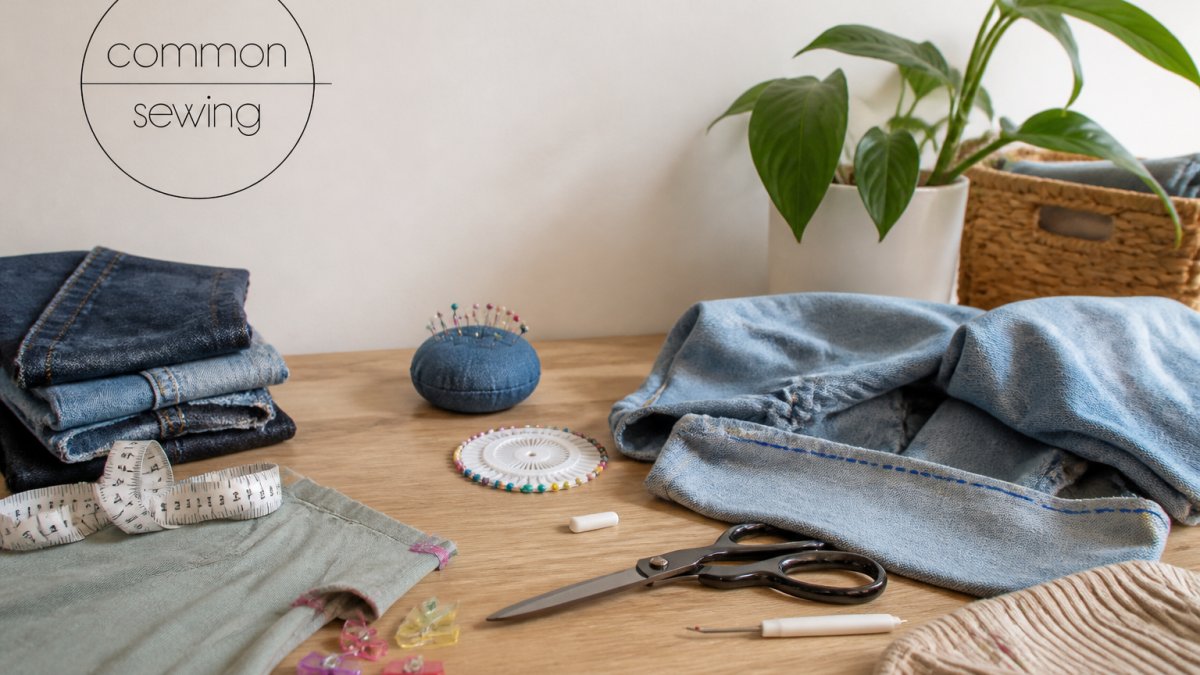
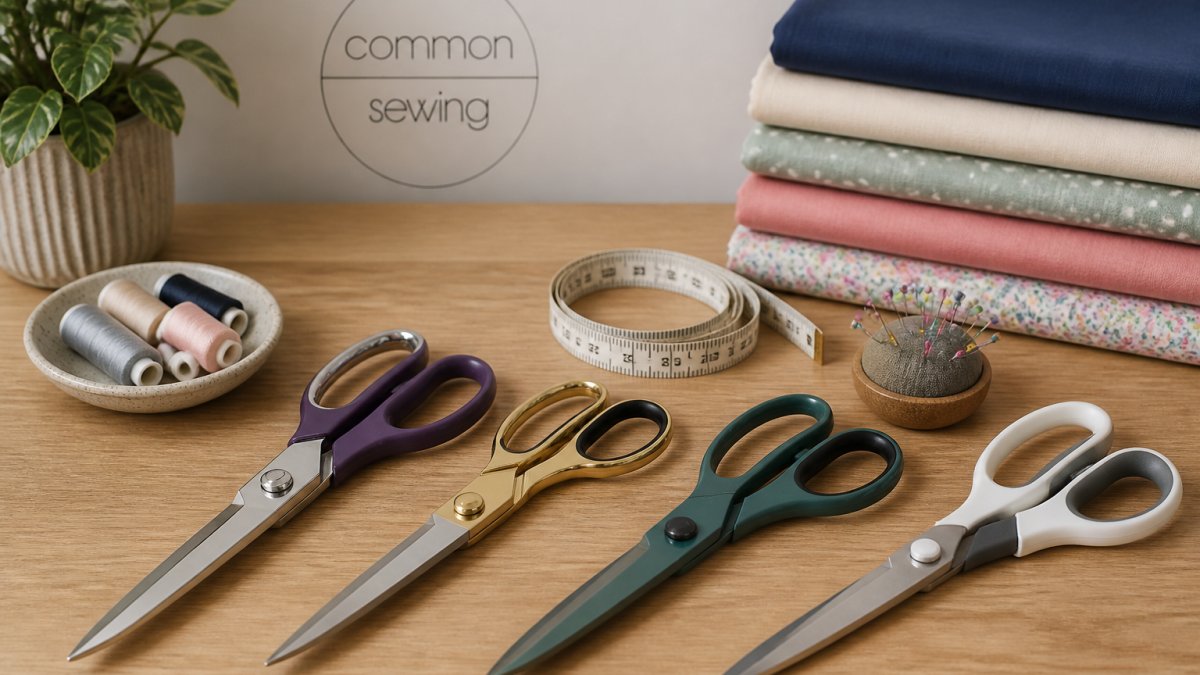
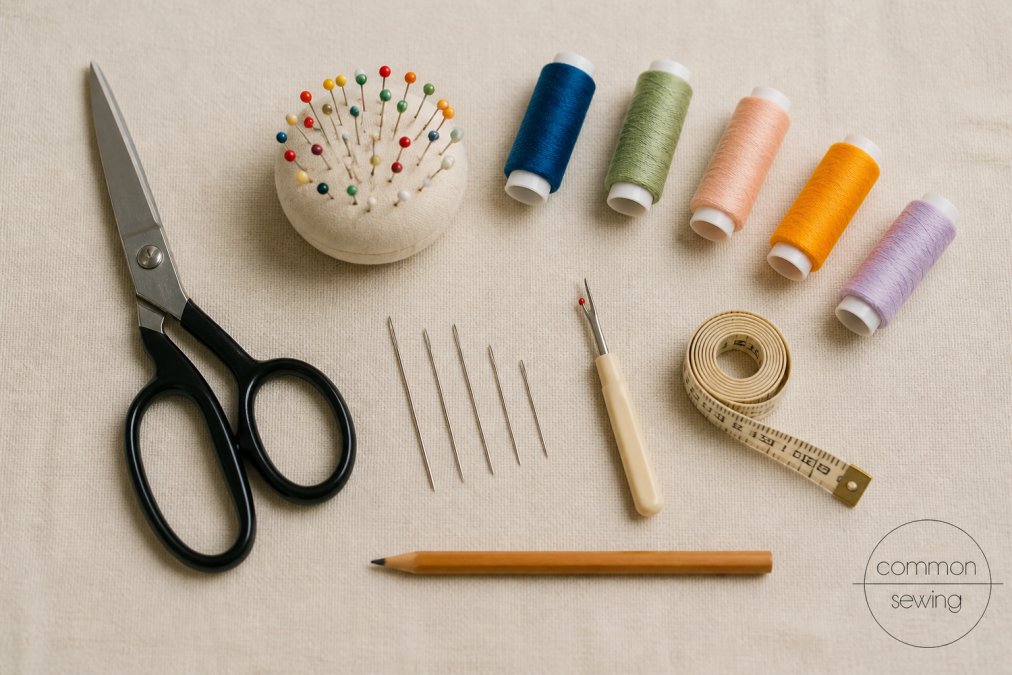
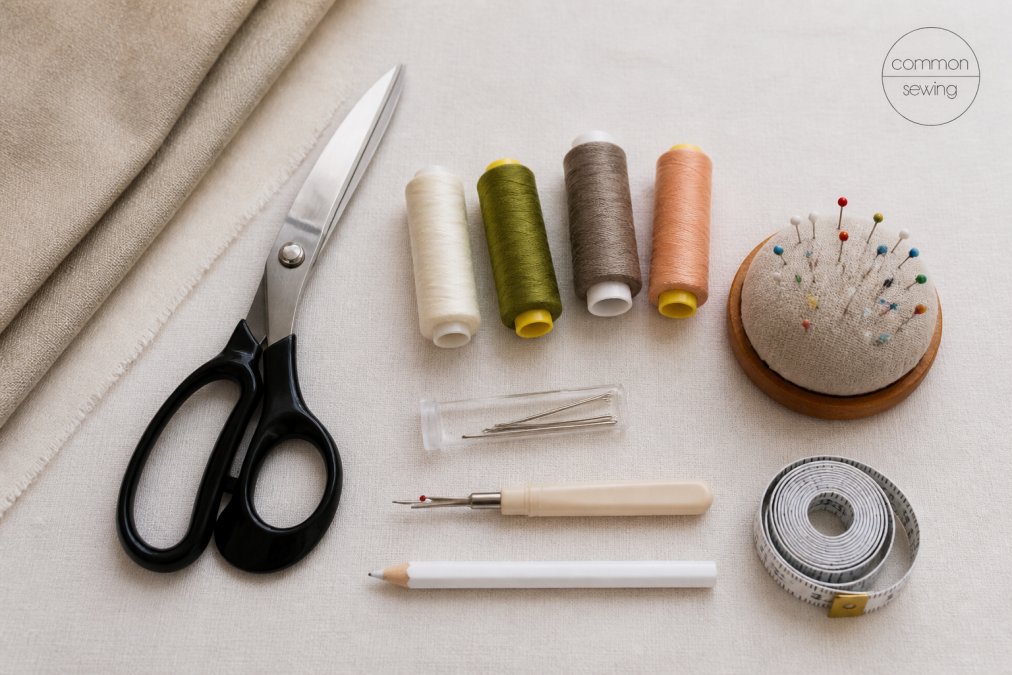
Hand sewing tools matter too. Sharp fabric scissors, a seam ripper, pins, needles, a measuring tape, and a marking pencil handle most beginner tasks.
A rotary cutter and self-healing mat make cutting faster and more accurate, though they're optional for your first projects. If you do add them, the Fiskars 45mm rotary cutter and OLFA self-healing mat are reliable choices that work together seamlessly.
Thread quality matters more than you'd think. Cheap thread breaks, tangles, and creates tension problems that feel like machine issues. Invest in decent all-purpose polyester thread from reputable brands, it costs barely more and eliminates a major source of frustration. I rely on Guterman.
Best Fabric for Beginner Sewing Projects
Cotton is your friend as a beginner. It's forgiving, predictable, and inexpensive. Quilting cotton and broadcloth are specifically designed for beginners, they hold their shape, don't slip around, and respond predictably to your machine's tension settings.
Avoid stretchy fabrics, unless you are making the Gigi knit tee - basic skill number 5. Otherwise, knits are hard to learn on as they require special tension, needles and treatment. I will teach you all of that in the Basic Skills Learn to Sew Series.
Fabric weight matters. Medium-weight cotton (around 4-6 ounces per square yard) is easier to control than lightweight muslin or heavy canvas. It feeds through your machine smoothly and holds seams without puckering.
Buy fabric specifically labeled for sewing, not craft cotton. The difference in quality is noticeable. Pre-cut fabric bundles designed for beginners take the guesswork out of yardage and often include complementary colors and patterns.
How Long Does It Take to Learn to Sew
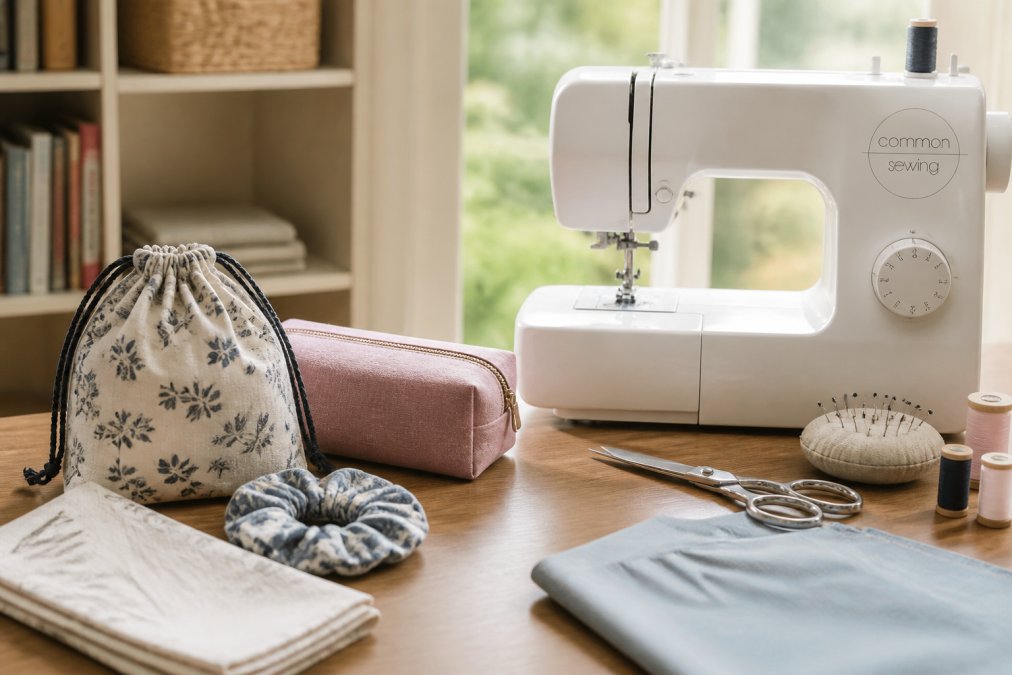
You can complete your first finished project in an afternoon. A simple drawstring bag or pillowcase takes 2-4 hours from start to finish, including time to set up your machine and troubleshoot tension issues.
Developing confidence takes longer. Most beginners feel reasonably comfortable after completing 3-5 projects (IDEO). That's typically 2-3 weeks if you're sewing once or twice a week.
Reaching the point where you can tackle garment projects, simple pants, skirts, or shirts, usually takes 8-12 weeks of consistent practice. But "consistent" here means an hour or two per week, not intensive daily work.
The real timeline depends on your definition of "learning to sew." Can you thread a machine and sew a straight line? Two hours. Can you finish a wearable garment? 8-12 weeks. Can you troubleshoot problems and adapt patterns to fit? That's 6-12 months of regular practice.
=== FAQ ANSWERS (audit these too, same rules) ===
[1] Q: What are some easy sewing projects I can do in one day? A: Drawstring bags, simple pillowcases, and small pouches are perfect one-day sewing projects for total beginners. These projects use straight stitches and require minimal pattern pieces, so you can complete them in 1-2 hours once you're comfortable with your sewing machine. Start with cotton fabric scraps to keep costs low while you build confidence with your presser foot and stitch length settings.
[2] Q: How long does it take to learn to sew well enough to start projects? A: Most beginners can start their first simple project after 2-3 hours of machine setup and basic practice. Learning to thread your needle, adjust tension, and execute a straight stitch typically takes one practice session. However, developing true confidence and skill with seam allowances, pinning, and pattern reading takes consistent practice over several weeks. A structured curriculum helps you progress faster than fragmented tutorials.
[3] Q: What fabric should I use for my first sewing projects? A: Cotton fabric is ideal for beginner sewing projects because it's forgiving, affordable, and easy to work with. Look for lightweight cotton in solid colors or simple prints. Avoid stretchy knits, slippery synthetics, and heavy fabrics like denim until you've mastered tension and needle size. Fabric scraps from old sheets or clothing work perfectly for your first projects while you learn seam allowance and backstitch techniques.
Frequently Asked Questions
Q: What are some easy sewing projects I can do in one day?
A: Drawstring bags, simple pillowcases, and small pouches are perfect one-day sewing projects for total beginners. These projects use straight stitches and require minimal pattern pieces, so you can complete them in 1-2 hours once you're comfortable with your sewing machine. Start with cotton fabric scraps to keep costs low while you build confidence with your presser foot and stitch length settings.
Q: How long does it take to learn to sew well enough to start projects?
A: Most beginners can start their first simple project after 2-3 hours of machine setup and basic practice. Learning to thread your needle, adjust tension, and execute a straight stitch typically takes one practice session. However, developing true confidence and skill with seam allowances, pinning, and pattern reading takes consistent practice over several weeks. A structured curriculum helps you progress faster than fragmented tutorials.
Q: What fabric should I use for my first sewing projects?
A: Cotton fabric is ideal for beginner sewing projects because it's forgiving, affordable, and easy to work with. Look for lightweight cotton in solid colors or simple prints. Avoid stretchy knits, slippery synthetics, and heavy fabrics like denim until you've mastered tension and needle size. Fabric scraps from old sheets or clothing work perfectly for your first projects while you learn seam allowance and backstitch techniques.
This article was written using GrandRanker