 listicle
Why Sewing Tutorials Are Confusing
Table of Contents
- Why Sewing Tutorials Leave Beginners Confused
- How to Learn Sewing From Scratch
- How to Read a Sewing Pattern
- Beginner Sewing Mistakes to Avoid
- Frequently Asked Questions
Last Updated: September 3, 2026
Why Sewing Tutorials Leave Beginners Confused
Sewing tutorials are everywhere, yet most beginners end up frustrated. The problem isn't that tutorials exist, it's how they're structured. One video assumes you know how to thread a machine. Another skips tension settings. A third uses jargon without explanation. Beginners jump between sources, each teaching differently, collecting disconnected fragments instead of learning a skill. Video tutorials move at the creator's speed, not yours. Written patterns assume you can visualize steps that aren't shown. The real issue comes down to three things: inconsistent terminology, skipped foundational steps, and a mismatch between how tutorials teach and how beginners actually learn.
How to Learn Sewing From Scratch
Start with the machine itself, not a project. Learn the parts: the presser foot, the feed dogs, the tension dial, the bobbin. Know what each one controls. Practice threading without fabric, then make straight lines on scrap fabric for 30 minutes (common sewing).
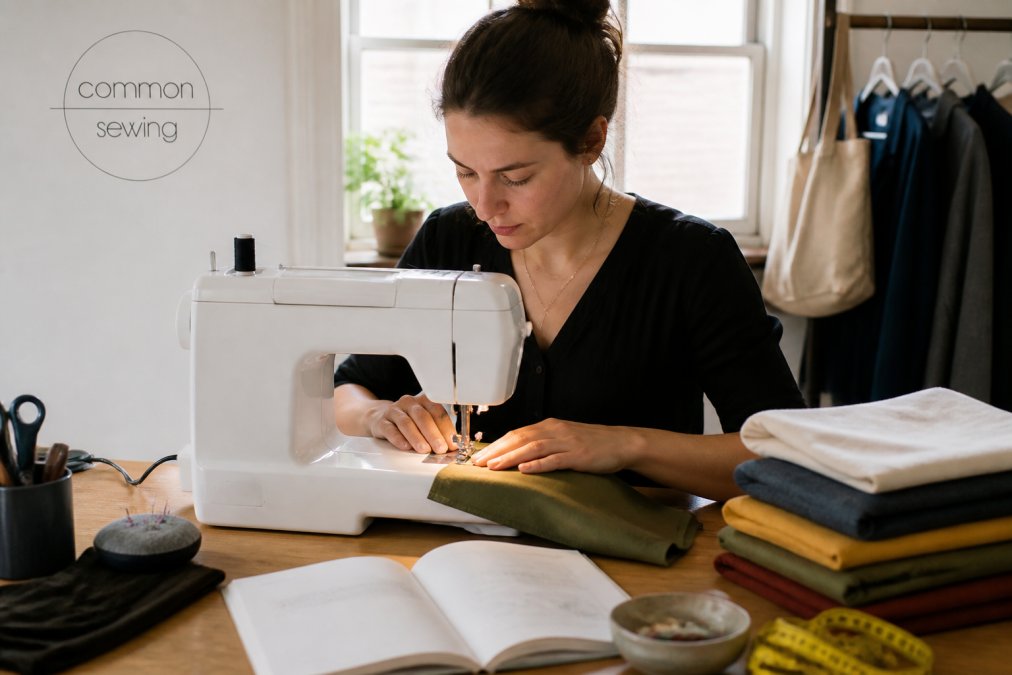
Master three basic stitches: the straight stitch, the backstitch, and the zigzag. Don't move forward until these feel natural. Practice on different fabric types, cotton behaves differently than stretchy knits, and lightweight fabrics need different settings than heavy ones.
Only after this foundation should you attempt a project. Your first project should be simple: a pillowcase or drawstring bag with straight seams and no zippers. The goal is to apply what you've learned and build confidence.
How to Read a Sewing Pattern
Sewing patterns look like a foreign language, but they're just compressed instructions. Start by identifying key elements: the pattern pieces (shapes you'll cut), the grain line (which direction to lay the pattern on fabric), and the seam allowance (the space between the edge and where you sew).
Read the pattern legend. Every pattern includes a key explaining symbols. Circles mean dots you mark. Dashed lines mean fold lines. Arrows show grain direction. Follow the construction sequence step by step, patterns list steps in order for a reason. Read every instruction completely before you cut fabric.
Beginner Sewing Mistakes to Avoid
The biggest mistake is ignoring seam allowances. Your pattern includes a seam allowance (usually half an inch) that gives you room to sew without fabric fraying (learn to sew basics). Cut outside that line, not on it.
The second mistake is skipping pattern markings. Those dots, notches, and lines are alignment points. Transfer them to your fabric with a marking pen or tailor's chalk.
Sign up with your email address to receive news and updates. →
Third: not testing tension before starting a project. Tension controls how tight your stitches are (basics). Too loose and seams fall apart. Too tight and fabric puckers. Test on a scrap first.
Fourth: rushing through basting. Basting is temporary stitching that holds pieces together before you sew permanently. It saves hours of unpicking mistakes.
Common Beginner Mistake | Why It Happens | How to Fix It |
|---|---|---|
Ignoring seam allowances | Looks like extra space | Cut and sew on the marked lines exactly |
Skipping pattern markings | Seems unnecessary | Transfer every dot and notch to fabric with marking tools |
Not testing tension | Feels like wasting time | Test on scrap fabric before starting your project |
Rushing basting | Seems like an extra step | Baste every seam to prevent unpicking |
The core reason tutorials confuse beginners is they skip the mental model, the understanding of why you're doing something, not just how. You need to know why seam allowances exist, why grain line matters, why tension affects your stitches.
Learning to sew doesn't require jumping between fragmented videos or decoding cryptic patterns alone. A structured approach, starting with machine fundamentals, mastering basic techniques, then applying them to real projects, builds actual confidence. Common Sewing offers step-by-step, project-based learning designed for beginners who want to move past confusion and actually sew with ease.
Frequently Asked Questions
What makes sewing tutorials so confusing for beginners?
Most sewing tutorials jump between concepts without explaining foundational skills, assume viewers already know sewing terminology, and pack too much information into short videos. They often skip critical steps like threading the machine or adjusting tension, leaving beginners stuck without knowing where the problem started. Fragmented tutorials from different creators use different terminology for the same techniques, creating confusion about basic sewing concepts.
How long does it take to learn sewing from scratch with a structured program?
With a structured, project-based program that builds skills sequentially, beginners can master foundational sewing techniques. Learning from random tutorials typically takes longer because you may spend time searching for answers, rewatching videos, and relearning concepts. A step-by-step curriculum can help eliminate cognitive overload by introducing one skill at a time, allowing you to practice and build confidence before moving forward.
What are the most common mistakes beginners make when learning to sew?
Beginner sewing mistakes to avoid include incorrect seam allowance measurements, improper tension settings that create loose or puckered seams, skipping the bobbin winding step, and attempting complex projects before mastering basic stitches. Many beginners also rush through pattern reading, misunderstand grain lines, and don't practice on scrap fabric first. These mistakes can compound when learning from videos that don't emphasize foundational techniques or assume you already know machine operation basics.
This article was written using GrandRanker
Frequently Asked Questions
Q: What makes sewing tutorials so confusing for beginners?
A: Most sewing tutorials jump between concepts without explaining foundational skills, assume viewers already know sewing terminology, and pack too much information into short videos. They often skip critical steps like threading the machine or adjusting tension, leaving beginners stuck without knowing where the problem started. Fragmented tutorials from different creators use different terminology for the same techniques, creating confusion about basic sewing concepts.
Q: How long does it take to learn sewing from scratch with a structured program?
A: With a structured, project-based program that builds skills sequentially, beginners can master foundational sewing techniques. Learning from random tutorials typically takes longer because you may spend time searching for answers, rewatching videos, and relearning concepts. A step-by-step curriculum can help eliminate cognitive overload by introducing one skill at a time, allowing you to practice and build confidence before moving forward.
Q: What are the most common mistakes beginners make when learning to sew?
A: Beginner sewing mistakes to avoid include incorrect seam allowance measurements, improper tension settings that create loose or puckered seams, skipping the bobbin winding step, and attempting complex projects before mastering basic stitches. Many beginners also rush through pattern reading, misunderstand grain lines, and don't practice on scrap fabric first. These mistakes can compound when learning from videos that don't emphasize foundational techniques or assume you already know machine operation basics.